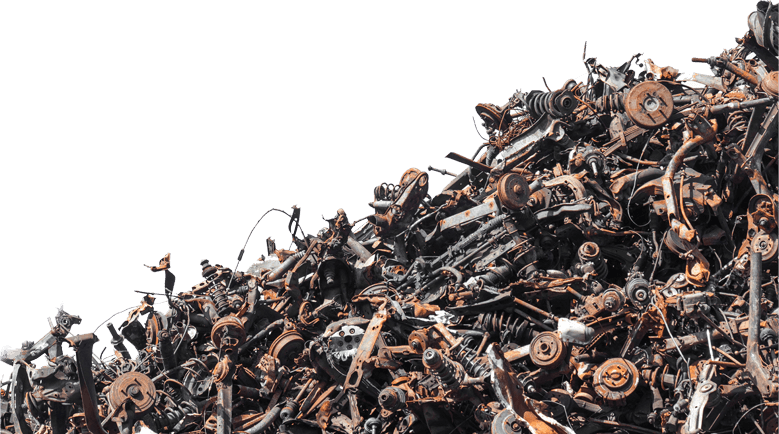
10 Things To Do With Scrap Metal Around The Home

Scrap metal is a valuable resource, and many of us may not realise how much we have lying around in the home. In this article, we’ll be going through 10 things you can do with your scrap metal today.

  1. Make a tin can telephone by removing the lids from two coffee tins and tying a long piece of string between the two to create the desired effect. Then, sit back and let the kids enjoy!
  2. Using an old steel can, place any steel bottle tops or jam jar lids inside for a fuss-free storage solution for your metal in the home. When the can is full, you can toss it into your recycling bin all together.
  3. Place jam jar lids under the legs of your couch or bed to prevent your furniture from scratching the floor.
  4. Create a piece of art by bringing together different recycled elements. This can become a fun, rainy day activity for the kids that promotes creativity and sustainability- what more could you want?
  5. Turn aluminium cans into mini plant pots, and create a herb garden in your very own kitchen. After washing the cans, place soil into each container and add water to make the environment moist. Following this, add herb cuttings or seedlings into each container, and allow them as much natural light as possible.
  6. Donate pots and pans to charity and opportunity stores where possible, rather than throwing them out. This means there’ll be a higher chance these household items go to a good home, rather than wasting away in landfill.
  7. Make a windchime with old silverware; begin by drilling holes through each of the handles of the silverware, and then attach them to a central fork or spoon with string, wire, or any material of your choice.
  8. Spray paint old metal frames with a new colour of choice, for an updated way to display memories with your loved ones. Make sure to do this outside, as the fumes can be quite toxic!
  9. Create two bookends using scrap metal found around the home; with some basic welding material, you can turn your scrap metal into functional pieces of art for your bookshelf.
  10. Exchange your scrap metal for cash; Metal Men Recycling offer a 24-hour pickup service for scrap metal, and will give you cash in return.

With over 50 years of experience in the metal industry, you can’t go wrong by calling Metal Men Recycling on 03 5941 6677 to get cash for scrap metal today.
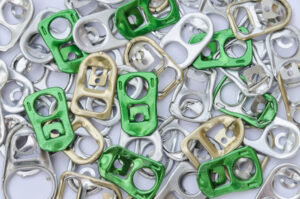
Metal Recycling: How Does Australia Stack Up?

Many young Australians won’t remember a time when the humble aluminium can was thrown away, rather than recycled. For many reasons, scrap metal has become increasingly common in Australia as an innovative way to meet society’s needs by reducing carbon emissions, and to sustainably manufacture more consumer goods that require the use of metal. In this article, we’ll be going over where Australia stands when it comes to recycled metal.

Can Rings

The Rest Of The World

The EU, Japan and Korea all have legislation in place to recycle metals. This may be down to the economic factors, but there’s also a certain level of awareness from both politicians and consumers regarding sustainability. In the EU, there’s a focus on ‘end-of-life’ considerations, particularly when it comes to the car industry. This also applies to consumer goods across various industries, and the onus is on the manufacturers, rather than the individual consumer, to shift to more recycled or recyclable products. When looking at OECD countries, Australia lags behind, but that’s not to say we don’t have any plans in place at all.

The National Waste Policy

Run by the Department of Environment and Energy, the National Waste Policy is an efficient, environmentally focused approach to waste management in Australia. With a focus on six key areas, the policy aims to ask government bodies, businesses and individuals to take responsibility for sustainability. Its aims centre on the management of waste as a resource, the reduction of greenhouse gas emissions, improvement of waste disposal and treatment strategies, and serves to increase energy conservation procedures. Beyond these aims, an essential element is the reduction of the amount of waste in general, and to focus on cradle-to-cradle lifecycles for consumer goods.

Many of our resources such as oil and coal are going to run out eventually, so it’s imperative that we increase our efforts to recycle and deliver more sustainable outcomes. Ultimately, change comes from the individual, so if you’re environmentally inclined, get in touch with Metal Men Recycling on 03 5941 6677, who will give you cash for scrap metal.

What Happens to Your Recycled Metal

Have you ever wondered what happens to your recycled scrap metal? In this week’s blog, we examine a few of the common uses for commonly recycled scrap metals such as copper, aluminium and steel, so that you can be sure your scrap is being put to good use. Here are six different ways scrap metal is re-purposed.

Industrial use

Scrap metals like iron and steel have many varied industrial uses, from the construction of public infrastructure like roads and bridges to transportation (including in the manufacture of trains, ships, and aircrafts). Cast iron also has uses in construction as a decorative material, and is often used to make things like hardware, balustrades, eaves and plaques.

Furniture

Furnishings and home fittings like benches, tables, lamps, chairs, light fittings, bed frames and door handles are frequently made from recycled scrap metal. Metal furniture, when made well, is very sturdy and can last for many years.

Artistic use

Considering many artists are concerned with sustainability, it makes sense that they try to use recycled materials wherever possible. Scrap metal is often used in artistic works such as sculptures, decorative metalwork, installations and jewellery, which make their way into private collections to be treasured for many years, or instead are featured around cities as public art.

Residential

Many recycled metals are commonly used in residential construction, with copper often being used as a plumbing material, in electrical wiring, roofing sheets and heat exchanges. Steel is also a common construction material, used to make house frames and roofing structures.

Electronics and whitegoods

Metals are also commonly used in the manufacturing of electronics, including in wiring and in the overall structure of large items such as fridges and washing machines. By recycling your old whitegoods and electronics, you are contributing to the sustainable creation of new goods.

Metal recycling plays an important role in sustainability. If you have scrap metal goods you’d like to trade in, contact Metal Men Recycling. We accept all kinds of scrap metal and are committed to sustainable practices.

5 Recyclable Products that you Can’t Put in Your Council Recycling Bin

Most local councils in Australia only have the resources to recycle certain materials (usually paper, glass, aluminium and steel) but there are plenty of other products and materials which can be recycled with a little extra effort.

  1. Car batteries

Classified as hazardous waste, car batteries as well as lead acid batteries contain a range of toxic compounds including lead, sulphuric acid and lead compound which if allowed to leach into the environment, can cause unspeakable damage. The good news is around 98% of lead and car batteries can be recycled and mechanics, service stations, and scrap metal dealers (including us) all commonly offer recycling services.

  1. Printer cartridges

Toner and ink cartridges from printers often end up in landfill but in fact they can be recycled into new cartridges. Officeworks, some Australia Post outlets, Harvey Normal, JB Hi-Fi, Office National and Office Products Depot are a few of the places you can recycled your old cartridges.

  1. Corks

Although corks used to be repurposed by cork flooring manufacturers, the proliferation of corks adulterated with resins resulted in inferior products and so they are no longer accepted. However, there are plenty of fun crafty ways to repurpose corks.

  1. Mattresses

Although used mattresses are generally not accepted by charity organisations, some organisations recycle mattresses for their components (wood, springs and foam) or clean them to provide a low-cost bedding option.

  1. Shopping bags and soft plastics

Although they are not accepted by most council recycling programs, selected supermarkets have a soft plastics recycling scheme (run by REDcycle) which accept things like food packaging, lolly wrappers, newspaper wrappings and cling film as well as plastic bags. Most supermarkets now accept plastic shopping bags as well as damaged reusable green bags.

Metal Men Recycling metal recycling services in Melbourne. We recycle all types of metal as well as car batteries and offer competitive prices. To learn more about our services, please don’t hesitate to get in touch with us by calling.

How to Choose the Right Scrap Metal Dealer

Choosing a metal recycling scrap yard is about more than just searching for the best prices in your area, you should also consider convenience, professionalism and loyalty programs. In this week’s blog, we give you a few things to look out for when choosing a metal recycler to ensure you have the best possible scrap yard experience.

Business environment

It’s a good idea to physically visit a few different scrap yards so that you can see what kind of technology each one uses and how they run their businesses. If the business has new, high-tech equipment, access to online metal markets and advanced administration protocols, they will probably be capable of handling large volumes of scrap metal, which is great for business to business scrap dealing. However, you shouldn’t rule out a scrap yard just because it has older equipment or a smaller team. Older, family owned businesses are also a great choice, especially for dropping off household items and because of their reduced running costs, they sometimes offer better exchange rates.

Location and hours

Obviously, you’ll need to choose a scrap yard in a convenient location with flexible operating hours so that you can actually trade in your metal goods. Better still, go a for a scrap dealer with its own (free) pick up service and leave collection duties to the scrap metal staff. If you’re working on a construction site and need to get rid of large amounts of scrap metal, your best bet is to find a scrap metal dealer that supplies its own collection bins that can be filled and picked up when the job is complete.

The variety of metal accepted

If most of your scrap metal comes from household items, it’s likely you’ll have a variety of different types of metal to trade in. Look for a scrap yard that accept all ferrous and non-ferrous metals to ensure you can sell your entire haul. If you choose a good scrap yard you should be able to sell:

  • Copper
  • Aluminium
  • Brass
  • Steel (including white goods like washing machines, dishwashers, ovens etc. as well as wrecked cars) and stainless steel
  • Cast iron
  • Bronze
  • Car batteries

Customer service

In any business transaction, good customer service always makes for a more positive experience. By taking the time to get to know your scrap metal dealer, you’ll get an idea of their work ethic and begin to build a rapport, which should result in positive business dealings. You’re better off going to a trustworthy metal scrapper with whom you can establish mutual loyalty over a scrapper who claims they will offer the best price but fails to deliver in terms of service. All good scrappers will reward you for repeat business, so once you find a good one, stick with them!

Special offers

Scrap dealers often offer monthly specials to boost their inventory of certain metals and to keep up with market prices, so if you have large amounts of a particular type of metal (for example aluminum cans or copper wiring), it’s worthwhile checking around for corresponding specials.

Environmental consciousness

By its very nature, metal recycling is an environmentally friendly industry as recycling metal uses far less energy than producing new metal and combats waste. However, some metal scrappers will go the extra mile, using energy efficient vehicles and machinery, reducing fuel consumption wherever possible and implementing environmentally conscious practices such as paperless admin. If minimal environmental impact is a concern of yours, look for metal dealers committed to sustainability.

General pricing

Of course, pricing is a major factor when choosing a scrap yard, as you want to be able to yield a decent profit from your metal recycling efforts. Do your research on market prices and check these against the prices offered by each scrap dealer to make sure you’re getting a fair deal. Remember, prices can vary greatly depending on supply and demand, so you can always ask a trustworthy metal dealer about their market predictions for the coming months so you can figure out when best to cash in your haul.

By keeping these factors in mind when deciding on which scrap yard to sell your scrap metal to, you’ll be able to narrow down your choices to dealers offering competitive prices and friendly, professional service. Metal Men Recycling are a family owned scrap metal company based in Pakenham. Our friendly staff have over 50 years of collective industry experience and we offer fantastic rates for all kinds of ferrous and non-ferrous metals.

How to Make Money from Sustainable Hobbies

If you have an interest in sustainable living, and also fancy making some extra cash, there are various ways to monetise your green hobbies. In this blog, we look at some of the best environmentally friendly ways to earn extra money.

Refurbish old furniture

There is a huge market for antique and retro furniture, so if you regularly spot old discarded furniture that, with a bit of fixing up, could easily be sold for profit, then why not make a side business out of it? If you have any skills in carpentry or upholstery, then refinishing furniture is a great way to both recycle and make some extra money. Whether you want to restore antique furniture to its original grandeur, or you plan on updating it with a modern twist, you’ll be saving it from landfill and, hopefully, reducing the rate at which new furniture is produced and sold.

Capitalise on your green thumb

If you have a passion for gardening, you may want to set up a stall at your local farmer’s market. Farmer’s markets are a great place to sell local produce, so whether you grow an abundance of fruit and vegetables in your backyard, or are skilled in cultivating beautiful house plants and flowers, you’ll definitely be able to monetise your horticultural talents. Gardening, of course, entails more than just growing plants, so if you’ve got a talent for making beautiful garden pots, or have a particularly good compost heap at home, you’ll definitely have a product or service worth selling.

Recycle old metal

Metal recycling is a great way to earn extra cash while cutting down on consumption and doing your bit for the environment. It’s pretty easy to find scrap metal around the home; in the kitchen look for things like aluminium soft drink cans, steel soup and been cans, aluminium foil; in the bathroom search for empty aerosols and cosmetic tins; and in the garage look for things like copper wiring, old car parts and discarded metal furnishings or fixtures. If you want to earn a sizeable amount of cash for your scrap, check out verge side collections for large metal appliances like fridges and washing machines.

These sustainable hobbies are a great way to earn extra pocket money while doing your bit for the environment. If you want to trade your scrap metal for cash, Metal Men Recycling should be your first point of call. Metal Men Recycling accept all kinds of scrap metal and even offer a 24-hour pickup service for large items.

Don’t Abandon your Car, Recycle it Instead!

Did you know that around 80% of a car can be recycled including aluminium from the body, the battery, windshield and tyres? Sadly, thousands of cars are abandoned around Australia every year by drivers looking to avoid the costs of professional disposal, but the costs of this method of disposal are far greater than the cost of say, towing a car to a scrap yard. This week, we look at why you should not abandon your car and how you can make money from recycling it instead.

It costs local councils money

Whilst you might think you’re saving money by dumping your car, all you are really doing is fobbing off the cost onto your local council, who must jump through a number of costly and time consuming administrative hoops before they can collect, impound and eventually scrap or sell the vehicle. Of course, the time and money that local councils have to dedicate to managing abandoned vehicles is being payed for by you, in the form of council rates, which would otherwise go towards improving your community.

It’s environmentally hazardous

That rust bucket you’re thinking of getting rid of is full of highly toxic chemicals including petrol, oil, battery acid, transmission and brake fluid, diesel and coolant which can leach from the car into the ground (and eventually the groundwater) as the vehicle deteriorated in the elements.

It’s dangerous

Abandoned cars are a fire hazard as if they are surrounded by dry dead leaf material in the bush, they can spontaneously combust and cause a fire, or accelerate a fire that is already burning to send it out of control. Submerged cars are also a huge issue and can become a deadly unseen hazard for swimmers, wildlife, and water vehicles.

It sets a bad example

Aside from being dangerous and environmentally hazardous, abandoned cars often become a beacon for other people looking to illegally dump their rubbish, and can result in a large area being ruined by not only car chemicals and rusting parts, but abandoned appliances and household garbage which exacerbate the problem as well as create new issues (i.e. attract scavengers).

You can make money and do the environment a favour by recycling it instead

Abandoning your car is not only dangerous and wasteful, it’s more time consuming and costly than getting in touch with a scrap metal recycler. Metal men offer 24 hour scrap metal pickup services for all metal scrap and are happy to pay you on the spot for your old vehicle. We guarantee fair rates and can pay in cash, cheque, or by EFTPOS. To enquire about our pickup services, please don’t hesitate to get in touch with us by calling 03 5941 6677.


Metal Men’s Guide to Household Recycling

Most Australian households have a designated recycling bin provided by their local council, which makes recycling easier than ever, however it’s important to know which items to put in this bin, which items need to be dropped off at/picked up by special collectors, and which belong with the rest of the rubbish. In this blog, we provide a few handy tips that will help you recycle more efficiently and effectively.

What can be recycled?

There are many different materials that can be recycled using your kerbside recycling bin, including glass (think wine and other drink bottles, jars, old pharmaceutical bottles etc.), hard plastic (takeaway food containers, empty toiletry bottles and jars, empty cleaning product bottles, milk bottles, yoghurt and ice cream tubs) and paper and cardboard (including cereal boxes, biscuit boxes, egg cartons, scrap office paper, old notebooks etc.). Metal items (such as aluminium cans, aerosols, baked bean and other food cans, pet food cans, alfoil etc.) can also be recycled, however you may want to collect these items separately so that they can be taken to your local scrap metal dealer, as this is a fantastic way to earn some extra cash while doing your bit for the environment.

What should be kept out?

Recyclables don’t have to be spotless before they’re put in the recycling bin, however it’s important to make an effort to remove the bulk of food scraps. Refrain from bagging your recyclables, as plastic bags cannot be recycled and could result in your recycling being lumped in with the rest of the landfill. There are also various recyclable items that have their own specific collection programs/centres. Green waste has its own kerbside collection dates, along with drop-off centres, depending on your council, as does eWaste (old electronics like phones, TVs and computers), old furniture and other household items, and waste construction materials like timber, bricks and rubble. For items that are still in good condition, consider donating to your local op-shop or holding a garage sale.

What about scrap metal?

As mentioned earlier, small household metal items can be exchanged for cash at your local scrap metal dealer. In addition to these items, other forms of scrap metal like old car parts (including batteries), copper wiring, copper and/or brass piping, door fittings and whitegoods can also be sold to reputable scrap metal dealers.

By implementing an organised recycling system at home, you’ll not only be doing your bit for the environment, but you’ll also create the opportunity to earn some extra pocket money. Metal Men Recycling accept all kinds of scrap metal and even offer a 24 hour pickup service for larger items.

The Industrial History of Pakenham

Metal Men Recycling is proud to operate from the Melbourne suburb of Pakenham, which has been an important industrial hub for the region since the 19th century. This week, we celebrate that history with a few interesting facts.

Pakenham grew up around the Latrobe Inn (Later Bourke’s Hotel, now the Princes Highway Hotel)

Pakenham was originally an estate first taken up in 1839 but once the inn sprung up in 1848 and the post office in 1859, it became a service centre for the surrounding farms, particularly the orchards in the Toomuc Valley and Pakenham Upper. In 1877, the railway opened and became an important part of the east link connecting Melbourne and other eastern towns.

Tynong Quarry supplied granite for the Shrine of Remembrance

The nearby town of Tynong was the place where the distinctive silver grey granite for Melbourne’s Shrine of Remembrance was quarried after World War I. Tynong granite is known to be exceptionally hard but can be split straight, making it perfect for use in a monument. The quarry created a lot of jobs in the area, so much so that a small boarding house in Tynong was established.

The Raleigh/Nestle factory gave Pakenham the growth spurt it needed to become a suburb

The Raleigh Preserve company opened a factory in Pakenham in 1951 which specialised in shelling and canning Koo Wee Rup peas. In the late 1950s, the factory was bought out by Crosse and Blackwell, which then began producing pickles and stuffed olives. Nestle acquired the company in 1960 and built an additional baby food factory in Pakenham in 1962. In the 1980s Nestle built a frozen food factory in Pakenham and eventually added the Lean Cuisine production line in the factory in 1985. In 2009, the Gippsland Food Company was created and the factories were bought by Simplot Australia. This long industrial history helped create hundreds of jobs and helped many families settle in the area after World War II. The factories still play an important role in Pakenham today, employing 230 staff and producing soups, sauces, and pasta as well as frozen and chilled meals.

Transpacific Industries and the mysterious smell

In 2007, Packenham locals began to complain of a recurring smell described variously as a ‘burning chemical smell, ‘the stench of dead bodies’ or a putrid smell that was able to infiltrate homes’. Transpacific Industries, an organic waste recycler was found to be the source of the smell and the company has since ceased to operate in the area.


Metal Men Recycling offer premium metal recycling services in Pakenham including offering cash for scrap. To learn more about our capabilities, please don’t hesitate to get in touch with us by calling 03 5941 6677.

How to Make Recycling Fun for Kids

In the interests of promoting sustainability and joining the war on waste, it’s a good idea to recycle wherever possible. When recycling at home, be sure to get your kids involved and encourage them to adopt sustainable practices. One of the best ways to get your kids to practice regular recycling is to make the process as fun as possible, so we’ve come up with a few tips to make recycling around the home an exciting and educational experience.

Start early and lead by example

One of the best ways to get kids into a recycling mindset is to lead by example and expose them to your own recycling habits. Set up recycling bins where your children can see them and talk to them about the process whenever they observe you recycling e.g. “plastics go in the blue bin, paper in the green bin and metals or e-waste in the red.” Soon, your children will want to join in themselves to see if they can correctly select the right bin!

Convenience is key

The key to getting your kids into recycling is to make it as convenient as possible for them, so it’s a good idea to have several different bins throughout the house. For example, you may have marked recycling bins in the kitchen, one in the bathroom or toilet for old toilet rolls, and one in their bedroom for waste paper.

Turn it into a game

Matching recyclables to different coloured bins is just one of the many ways you can turn recycling into a fun game for your children. You may even want to expand on your recycling efforts by taking them outside the home, encouraging picking up litter in public parks, collecting aluminium cans, and even hiring or buying a metal detector for trips to the beach. Make little games out of each task by offering rewards for whoever collects the most recyclables.

Explain and educate

Of course, there is little point in getting your kids to recycle if they don’t understand why they’re doing it. Educate your children about the importance of recycling, along with how to reduce consumption and practice sustainability. You may even want to take them on a day trip to a local recycling plant, or a metal recycling facility so they can observe the recycling process.

If you’ve got scrap metal lying around the home, exchange it for cash with Metal Men Recycling (and feel free to bring your kids along for the experience). Metal Men Recycling gladly accept all kinds of ferrous and non-ferrous metals, including iron, steel, copper, aluminium, brass and more.

5 Zero Waste Blogs Worth Following

Here’s a depressing fact: the average Australian produces 1.5 tonnes of waste in a year. But perhaps even more disturbing is the fact that a great deal of the waste is avoidable (for example edible food waste) or recyclable (plastic packaging and compostable food scraps). The shocking amount of waste people in developed countries produce has inspired many people to become creative about waste elimination and recycling, known as the zero-waste movement. This week, we run through five of our favourite zero waste bloggers to draw inspiration from.

Trash is for Tossers

One of the most established zero-waste bloggers is New York based Lauren Singer. She’s made a career from her ‘how-to’ videos on YouTube and her range of all natural laundry detergent, but her well curated website is full of very practical advice about minimising waste in everyday life, with posts on things like zero waste wrapping  and zero waste alternatives to ordinary household items.

Paris to Go

Parisian based blogger Ariana Schwarz takes a philosophical (and very chic) approach to the zero-waste movement, asking big picture questions like ‘Is Zero Waste Ableist?’ whilst offering practical advice extrapolated from her own zero waste journey.

Zero Waste Chef

Written by passionate San Francisco based cook Anna Marie, this blog is all about tackling the edible food waste problem. This is a practical guide for people who rely on the supermarket supply chain system looking to cut down on processed foods, improve their meal planning, experiment with fermentation and of course, minimise food waste.

The Rogue Ginger

Erin Rhoads is perhaps the most well-known zero waste blogger in Australia. Her blog is all about her personal journey to find plastic free living alternatives and minimise the amount waste she produces in her day to day life. This blog is ideal if you want to see how the zero-waste philosophy plays out in an Australian lifestyle.

#NOTOPLASTIC

A newcomer to the zero-waste scene, Jessica Renz’s New Year’s Resolution for 2017 was to use a KeepCup for the rest of the year but this ambition quickly expanded into an attempt to reduce the amount of plastic she consumed in her everyday life. This blog is a great introduction into the zero-waste lifestyle, as Jessica herself is new to the movement, so her posts are about the small steps she is taking towards minimising her waste production.

As our name suggests, Metal Men Recycling is a business dedicated to ensuring a valuable resource such as scrap metal does not go to waste. We buy and sell scrap metal at competitive industry prices. Get in touch with us today by calling 03 5941 6677.