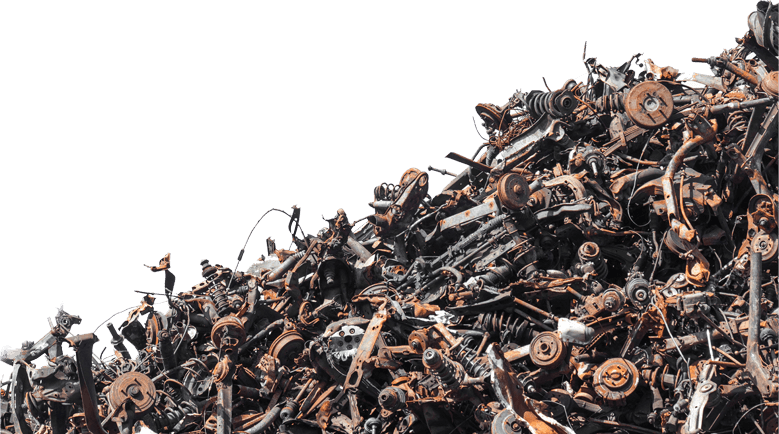
Recycling steel – cash for scrap

Steel is one of the most common metals found in the home and is incredibly important to the metal recycling industry. Steel is highly sought after because it is 100% recyclable and it contains valuable raw materials. Here’s some vital information about steel recycling for those new to the cash for scrap industry.

End of life for steel

Steel doesn’t really have an end of life, because it can be recycled an infinite number of times without losing any of its integrity. Steel is actually recycled more often than paper or glass combined!

Collection

Most steels contain chromium and nickel, which are valuable raw materials also found in iron. This makes recycling steel economically, as well as environmentally, viable. This value is why scrap metal collectors process steel for remelting and reuse.

Reclaimed scrap

There are two types of scrap that we refer to when we talk about steel and metal recycling – old scrap and new scrap. New scrap is found as cut-offs from industrial sites, as steel is pre-cut and then transported to the site for use. Old scrap, also called reclaimed scrap, is the scrap recovered from old appliances and other items such as washing machines, tanks, refrigerators, and old sinks and tapware.

Recycled scrap

Steel is usually made up of around 20% recycled matter, and stainless steel has an average recycled content of 60%. Specialists in scrap separate each type of steel to prepare it for the recycling process. The recycling processor delivers the scrap into an industrial shredder, which breaks it up into small pieces that can then be blended into chrome steels, alloys, and the many types of stainless steel

Steel – are there different types?

There are various types of steel, each with different properties. These types fall into the broad categories of alloy steels, carbon steels, stainless steels and tool steels. Each type of steel serves a different purpose and many can be found within household items, which is handy for those looking to profit from metal recycling.

Where can I find steel in my home?

Steel can be found in many places around the home; in the kitchen steel may be present within your sink, oven, stove top, fridge, kitchen bench or dishwasher. You may also may also find steel in the laundry in the form of a washing machine or dryer, or a laundry trough.

Stainless steel can found in many appliances, such as barbecues, kettles and toasters, and even empty deodorant or aftershave cans. And don’t forget that there is usually a wealth of steel in any work shed.

Whether you’re completely renovating your home, or just want to trade in your old or broken appliances, there is a wealth to be made from exchanging your scrap metal for cash. Metal Men are metal recycling professionals and will happily accept any of your unwanted steel, we’ll even collect it for you with our scrap metal pickup service!

10 Frequently Asked Questions about Recycling Scrap Metal

We all know where to go when we want to purchase a new car or fridge, but you may find yourself wondering where on earth you can take these items once they have reached the end of their lifespan. We often see people leaving whitegoods and other scrap metal out for hard rubbish collection, and we shake our head at the waste of money and the cost to the environment.
Here are some common questions we hear about scrap metal recycling and our helpful answers to your dilemmas:

1. Where should I take my old white goods if they’re too far gone to fix?

The quick answer is: nowhere. You don’t actually need to take them anywhere. Just call Metal Men Recycling and we will come and pick them up at a time that is convenient for you. We offer 24 hour turn around, so we will have your old white goods off your hands in no time. Instead of costing you money or the time it takes to wait for a hard rubbish collection, you will actually receive cash for your scrap metal and save time as we do the hard work for you.

2. What kind of scrap metal do you accept?

We accept all kinds of ferrous and non-ferrous metal materials. Most household equipment and industrial machinery, including fridges and even old cars won’t be a problem for us to pick up from your premises.

3. What if I have a fair bit of scrap metal?

Our pick-up service applies to any scrap metal, no matter the size or weight. Our service is all-inclusive, meaning we will supply you with the appropriate bins, deliver the bins to the property where the scrap metal is located, and then come and pick up the bins the next day (or at your convenience).

4. Do I have to pay for the bins?

Our bins are provided free of charge, and we have a vast range of bins on hand to satisfy your scrap metal collection needs.

5. What if I want to get rid of metal waste my business has produced?

We service businesses as well as homes. If you’re running a trade service, it may make things easier to bring your scrap directly to us. We offer a door-trade service along with our 24-hour metal collection service. Whether you have a factory, farm, or team of tradies, we make it super easy to get rid of your scrap metal.

6. How do you pay for scrap metal?

At Metal Men Recycling, we pride ourselves on being able to suit our customers’ needs. We offer EFTPOS, cash or cheque, depending on your preference.

7. Can I bring my metal scrap to you?

Yes, we offer a door trade service for drive-in customers. We have excavators and forklifts to help you unload and there is plenty of space for your car or truck.

How recycling your scrap metal can help save the environment

There is a wealth of cash for scrap to be made when it comes to metal recycling, but if you have any scrap metal lying around on your property, money is not the only good reason to recycle your metal-based junk.

Most scrap metal does not biodegrade

Abandoned vehicles and scrap metal from construction sites are among the most common environmental hazards. As well as being an eyesore, scrap metals can release toxic substances into the environment and create safety concerns for local communities. Most scrap metal is not biodegradable, meaning it is more or less immune to the natural processes and therefore it cannot be fed upon or broken down by microorganisms in soil, even after thousands of years. What this means is that scrap metal contributes to solid waste which is very hazardous for the environment and poses a threat to wildlife.

Recycling metal helps to conserve our raw materials

Clean Up Australia Day reported that scrap metal made up over 17% of the total litter participants collected. Furthermore, environmental repercussions are elevated by the fact that the dumped metal is not recycled – many metal alloys require less energy to recycle than to mine and process. By recycling scrap metal we are conserving our raw material resources for the future.

Steel is the world’s most recycled metal, and it can actually be recycled an infinite amount of times without impacting the integrity of the steel.

Car bodies represent hazardous waste

As well as rusting out and taking up space, car bodies may contain oil, diesel or petrol, paint, coolants, transmission and brake fluids which can leach harmful toxins into the environment. Rainfall and runoff take these toxins into our waterways or evaporate them back into the air.

When you see a car on the side of a road, the rusted shell can look hazardous, but the real hazard is below the bonnet. As well as these more insidious dangers, the fluids in the engine are highly flammable and are also highly combustible. Not only are the toxins a threat to local wildlife, but the vehicles can spontaneously combust and cause fires.

A lot of people dump cars because they are concerned about waste management charges. At Metal Men Recycling we will not only pay you cash for scrap, but our scrap metal pickup team will come and pick up your metal recycling and remove it from your premises for you, 24/7.

The history of scrap metal in Australia

Scrap metal recycling has been an important industry in Australia for more than a hundred years. In 1915, BHP Steel was the first Australian company to recycle its industrial steel scrap and other businesses soon followed suit. It is now a popular method of recycling Australia-wide, especially in big industries.

Making money from scrap metal

Old cars and whitegoods have always been valuable to the metal recycling industry.

Henry Ford recycled his Model T Fords to save on resources in the 1920s, and the car recycling industry remains very important today. Even car batteries can be salvaged for recycling.

Household items such as washing machines, fridges and dishwashers can also be used for scrap. Even smaller items such as copper wiring and aluminium cans can be turned into cash.

Old power stations close

In recent years, Australia has seen the closure of many old coal power plants, as global attitudes continue to shift in favour of renewable energy. The decommissioning of old power stations has created an abundance of scrap for the metal recycling industry. Scrap metal can be found in the roofing, reinforcements and structural elements, such as turbines, of old power stations. Recycling these materials is not only a great source of income, but is also beneficial to the environment.
Scrap metal recycling and sustainability

By recycling scrap metal, we help to eliminate waste and reduce landfill. Scrap metal provides us with the opportunity to recycle and reuse otherwise non-renewable resources, which reduces the strain on the environment.

Put simply, for each tonne of recycled steel 1,100 kg of iron ore, 50 kg of limestone, and 600 kg of coal are saved.

Scrap metal today

Although Australian manufacturing has decreased significantly, there is still a market for scrap metal recycling. Scrap metal can be found in many forms in businesses and households, and can easily be converted into cash. Metal Men Recycling offer cash for scrap metal, and accept all kinds of ferrous and non-ferrous metals. We even supply the bins and offer a 24 hour pickup service.

Scrap Metal: Does Size Matter?

Scrap metal in the ship breaking industry

Around half the world’s obsolete ships are sent to be scrapped on the beaches of Alang, a town in the Indian state of Gujarat famous for its ship breaking industry. Huge vessels, ranging from bulk carriers and supertankers to old passenger liners, are transported to Alang to be torn apart piece by piece and recycled for profit.

This kind of metal recycling is no mean feat and requires thousands of workers, however scrap metal recycling does not always take place on such a large scale.

Change your perspective on scrap metal

When people think of scrap metal recycling, their thoughts often turn to big industries, like the shipyards of Alang or the commercial tips filled with piled up cars and steel girders.

But there’s more to the scrap metal industry than just shipyards and large-scale auto wreckers – scrap metal can be retrieved from your very own backyard! Recycling your scrap metal is a quick and easy way to make some extra cash whilst clearing unwanted items from your home or workplace, you just need to know what to look for.

Scrap metal around the home can be anything, from an old, un-roadworthy car sitting idly in the driveway, to broken appliances such as fridges and washing machines. Even smaller items can be traded for cash including old bathroom fixtures, doorknobs and copper wiring.

Sorting through your scrap metal can seem like a daunting task, especially when you don’t know which kinds of metal you are dealing with. Do some simple research on different metal types to help you identify and separate your scrap metal before selling it on to a collection company. Alternatively, look for companies that accept a wide variety of scrap metals and do not require sorting.

Metal Men Recycling offer cash for scrap metal in Melbourne. We take all types of ferrous and non-ferrous metals, including aluminium, copper, brass and steel, and we will even supply the skip bin!

Places to find scrap metal around your home

You might not think it, but scrap metal can be found all throughout your home, whether in the kitchen, garden, garage or attic. And with Metal Men Recycling providing cash for scrap and a 24-hour pick up service, knowing where to find it might (quite literally) pay off! Here we look at some places to hunt for scrap metal in your home.

The kitchen

The kitchen is one of the most obvious places to source scrap metal, simply because it’s almost bursting at the seams with recyclable materials. Most appliances, from fridges to microwaves, contain their fair share of copper, something to consider before sending your outdated technology to the tip. Even silverware – if it’s made of stainless steel – can contribute to your scrap-heap.

Bathroom and laundry room

A slightly less obvious place to search for scrap metal is your bathroom or laundry room, which will be home to a number of bathroom fixtures and pipes. Often made with copper, these can be a great source of scrap metal.

The garage

Is your car on its last legs? Is it not even worth trying to resell? You could try to recoup your losses by taking it apart for scrap metal. Batteries, bolts, the radiator, rims – these are all valuable commodities at Metal Men Recycling! A place where most families hoard forgotten things, the garage might also come with a few surprising sources of scrap metal, such as old bikes, instruments or even old pieces of play equipment (such as that rusty old swing-set).

The attic

Like the garage, the attic is a fantastic source of forgotten-items that can be repackaged for scrap metal. Whether it’s an old lamp, a worn-out appliance or all those metal picture frames inherited from your great aunt, these long-lost bits and pieces could start paying dividends when you use them for scrap metal.

So now you know where to start looking – get hunting! Once you’ve gathered a scrap metal stash, give our professional team at Metal Men Recycling a call; we offer 24-hour pick up services and a great return on all the bits and pieces you no longer have use for.