5 Upcycling Projects to Transform your Home

At Metal Men Recycling, we’re all about helping our clients get rid of their unwanted scrap in an environmentally conscious way. Although we specialise in recycling metal, we recognise that there are plenty of other recyclable objects lying around the average Australian household that more often than not, go to waste. In this article, we look at 5 easy ways you can add a little flair to your home through upcycling.

  1. A tyre becomes a dog bed
    If you have a small dog, then this pet bed is a unique way to ensure they stay cosy through the winter months. Make sure you thoroughly clean the tyre out before painting it to remove any chemical residue and ensure the surface is primed for painting.
  1. A washing machine drum becomes a planter
    Washing machine drums are made from stainless steel so they are ideal for repurposing as planters outside. Pre-paint the drum if you wish using weatherproof paint, then set it on a base of bricks before filling it up with soil and compost. Finally, plant in some of your favourite flowers, veggies or herbs.
  1. Corks become miniature succulent magnets
    If you enjoy a glass of wine or two, you’ll doubtlessly have a few corks rolling around in your kitchen. This succulent and cork magnet project is a great way to keep corks out of landfill and add a little bit of green to your kitchen space.
  1. Colanders become light diffusers
    Sure, colanders are handy for draining your pasta and boiled veggies but they can also be upcycled as dramatic light fixtures. The perforated holes in the colander create a stunning speckled lighting effect and the wide lipped bowl shape will make a bold sculptural statement in your home.
  1. A pallet becomes a coffee table
    Pallets are probably the most popular object for upcycling at the moment and there are dozens of pallet furniture design patterns to be found online. However for speed and ease, you can’t go past this elegant coffee table design.

Metal Men Recycling offer cash for metal and 24-hour pickup around Melbourne. To learn more about the range of services we offer, please don’t hesitate to get in touch with our friendly team by calling 03 5941 6677.

Tips for Scrap Metal Collecting

Scrap metal collecting is a fantastic way to clean up your home or business, make a little extra money, and do your bit for the environment. If you’re thinking of dabbling in a little scrap metal collecting, then here are four handy tips to keep in mind.

Know your metals

One of the best pieces of advice to take on board if you’re an aspiring scrapper is to know your metals. Not all metals are made equal and bigger isn’t always better when it comes to collecting. Copper, aluminium, brass and steel are the most commonly scrapped metals and of these, copper is by far the most valuable due to it’s scarcity. Although you’re unlikely to find copper in any great quantities, the scrap price that copper wire, guttering and plumbing can fetch far outstrips what you’ll get for bringing in even twice that weight in stainless steel.

Take a magnet

Magnets are an incredibly valuable tool when scrap collecting as they are a sure fire way to tell the difference between ferrous and non-ferrous metals. The magnet will stick to ferrous metals contain iron and tend to fetch a lower price than non ferrous metals like aluminium, brass, copper and lead.

Understand grading

Scrap metal comes in different grades and fetches different prices depending on the alloy composition, the state of wear, and the amount of work that needs to be put into the metal in order to recycle it. Almost all metals come in different classes with the purest metals being the most valuable. Copper for example comes in three different grades, which fetch radically different prices.

Keep an eye on metal values

Want to know when you’ve got enough to turn a profit? The best way to do this is to keep an eye on the market price for industrial metals on a  site like Kitco. Although these don’t reflect scrap metal prices, or what you will be paid for lower grade or dirty materials, they can give you an idea of the current market value of the scrap you’ve collected, and can be used as a bargaining tool.

Once you’ve collected enough metal to make some money, bring your scrap to Metal Men Recycling. As Melbourne’s premier scrap metal buyers, we’ll offer you a fair price for your metal. To learn more about our services, please don’t hesitate to get in touch with us by calling 03 5941 6677.

Copper and Brass FAQS

Copper and brass are probably the two the most commonly confused metals. Although they are formed from the same base element, brass and copper have significantly different uses and properties. In this article, we answer some of the most common queries about copper and brass.

What’s the difference?

Copper is a base metal and chemical element which is leached from copper ore in the ground. Soft and malleable, copper is prized for it’s high thermal conductivity and is thought to be the first metal ever used by man. Brass is an alloy of copper and zinc in a ratio of around 65:35. The zinc makes brass a more rigid and durable material which is harder to cast and mould than copper, but has a much broader range of uses.

How can I identify them?

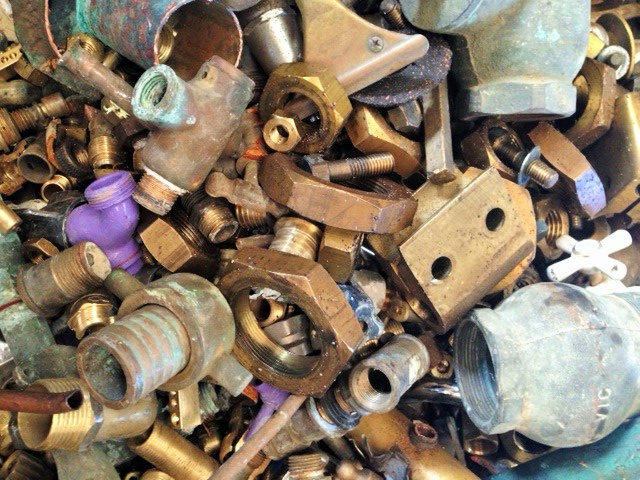
The most obvious way to tell the difference between copper and brass is colour; copper is typically a rich reddish brown whilst brass has more of a metal colour due to it’s zinc content. When copper corrodes, it turns a vibrant green colour, whilst brass tends to produce a dark brown colour after corrosion has taken place. The sound that the metals make when struck is the second easiest way to tell whether you have copper or brass; copper makes a round, mellow sound whilst the sound produced from brass will be higher pitch. In some cases, brass products are marked with a C and five numbers, whilst copper is almost never branded.

What are they used for?

Copper is most commonly used in fine electrical wiring for buildings and motor vehicles. Because of it’s attractive colour, copper is also a popular decorative choice and is also used in kitchenware due to it’s high heat conductivity. Due to it’s durability and similar colouring to copper, brass is often used in decorative detailing that also has a functional purpose. Common examples include zippers, doorknobs, and locks. Brass also has plenty of purely practical applications including in bullet casings, valves, and plumbing.

Which is worth more in the scrap industry?

Copper is one of the most highly prized metals in the scrap industry due to it’s rarity and the energy intensive processes required to extract it. Because of this, the scrap price of copper tends to be around 30% higher than that of brass.

Metal Men Recycling offer scrap metal pickup throughout Melbourne and pay fair prices for your unwanted copper and brass. Get in touch with us on 03 5941 6677 to learn more about our services.


Safety Tips For Scrap Metal Collecting

Collecting scrap can be a great way to earn a little bit of extra cash but there are risks involved that need to be considered. Scrap metal is often rusted, has sharp edges, or is located situated alongside other potentially hazardous materials. In this article, we discuss four simple ways to can safely collect scrap.

Wear appropriate safety equipment

Aged and rusting metal can be a hazardous material in of itself and it’s important to ensure you properly protect yourself with clothing that covers your skin, work boots, googles, and thick gloves. It’s also sensible to check that your tetanus vaccination is up to date (it’s recommended that you have a booster shot every ten years) as puncture wounds from mental are one of the most common causes of this condition and treatment is more complicated than prevention.

Make sure you clean any chemical residue off your skin

Often where there is an abundant source of scrap metal (old motor vehicles, disused factories, rundown sheds etc.), hazardous chemicals are also present. Wearing protective clothing is the first defence against these hazardous chemicals but it’s also important to ensure you thoroughly wash your hands, arms and any other exposed areas of skin with soapy water after collecting the scrap to remove any residue. If you suffer injuries or irritation as a result of coming into contact with chemicals whilst collecting scrap, seek medical help immediately.

Take care of your back

Back injuries are one of the most common injuries amongst scrap metal collectors and they generally occur when the weight of the metal is underestimated or it is improperly lifted. As a general rule, avoid lifting anything that is more than half your weight, have a partner help you lift and distribute the weight for heavier or bulkier pieces of metal, and above all, life with your knees rather than your back. If it’s possible, using a mechanical aid like a dolly can also reduce your chances of injury or strain related to carrying heavy objects over a distance.

Use appropriate equipment when transporting

If you do need to transport your collected scrap somewhere, then it’s crucial that you tie it down properly using a tarp and ratchet or octopus strap.

Metal Men Recycling offer cash for scrap metal in Melbourne. We offer a fair price for all recyclable scrap and a free 24-hour pickup service.

5 Ways Metal Men Makes Scrapping Easy

If you happen to have scrap metal lying around your home and business, going through the scrapping process can seem like a chore, and an exhausting one at that. Metal Men Recycling is dedicated to dispelling the idea that scrap metal recycling is a complicated process by providing simple, streamlined, and cost effective services that are only a phone call away. We pride ourselves in providing our customers with an unrivalled service experience that can be tailored to your needs. In this article, we look at five of the key ways that our company makes the scrap metal collecting process easier and more accessible.

Free bins

There are some companies whose entire business premise is renting out and collecting industrial sized bins, but at Metal Men we believe you shouldn’t have to pay in order to get rid of your old junk, and it’s for this reason that we offer free bins. We stock a wide range of bin sizes extending from half size collection skips for households through to industrial sized receptacles capable of managing the refuse from a factory or farm.

24-hour turnaround

We know that many of our Melbourne clients are time poor, and it’s for this reason that we over a 24-hour turnaround guarantee. We can also time our pickup and drop-off times to suit the needs of your schedule.

Personalised service

Our Account Manager Gary makes managing your scrap requirements a breeze and means you only need one point of contact throughout your scrapping experience. Gary is always ready to answer your questions and queries and provide additional bins, tools or resources if you need him to.

All the professional resources

We have all the tools and resources required to collect and sort your scrap. Whether you need a weighbridge with a 90 tonne capacity to a magnet or grab, we have everything required to safely and efficiently sort your scrap.

Farm and factory clean-up

We understand that large scale clean-up projects can be an overwhelming prospect for many business owners, and it’s for this reason that we’ve developed specialised services to help businesses manage their property and due diligence requirements. Our specialised clean-up services include industrial spaces and farms.

If you’re looking for specialised scrap metal collection in Melbourne, look no further than the friendly and capable team at Metal Men. For more information on our range of services, please don’t hesitate to get in touch with us by calling 03 5941 6677.

5 Reasons Why You Should Never Dump Your Scrap Metal

Although there are scrap metal businesses like ours operating in every state around Australia, Australians don’t have a great record when it comes to scrap metal recycling. During the 2015 Clean Up Australia Day in Victoria, 3,135 tons of rubbish was removed and 16% (501.6 tonnes) of that was metal left in illegal dumping sites. While dumping scrap metal might seem like an easy way to avoid the cost of professional disposal, it’s one of the most environmentally harmful types of rubbish. Here are 5 key reasons why you should never dump scrap metal.

Environmental pollution

Dumped car bodies and even household appliances like fridges and heating units can leach dangerous toxic chemicals into the environment if not properly disposed of. When you choose to dump your old car for example, you are essentially choosing to release chemicals including petrol, oil, diesel, coolants, brake and transmission fluids as well as battery acid into your local environment.

A potential hazard

In addition to the chemicals associated with larger metal objects, dumped metal dumped in bushland is known to spontaneously combust and can become the source of wildfires in dry areas. When metal is dumped in rivers and waterways, it also becomes a hazard to swimmers and wildlife which can become trapped.

You’re encouraging others to litter

When you dump a large metal object into the environment, you are sending a visible message to others that this particular site is okay to dump rubbish in and it’s likely that others follow suit. Often discarded metal household items and cars are the first items on an illegal dumpsite and once they appear, other people will be encouraged to leave their own waste there too. This creates a problem for the community and the local environment.

It’s illegal and can carry a heavy fine, or even jail time

In Victoria, an individual found illegally dumping rubbish of any sort can be fined up to $610,700 by the courts and can face up to 7 years’ imprisonment.

You’re losing out on a source of income

Perhaps the most counterintuitive part about dumping scrap metal is that scrap metal companies offer a disposal option that is easy, legal, and can actually earn your money. Metal Men Recycling offer free scrap collection services for everything from small pieces of household scrap through to motor vehicles and construction refuse. We pay fair prices for all of the metal we collect so next time you have metal refuse you want to get rid of, call our scrap metal pickup service on 03 5941 6677.

5 People Who Do Great Things with Scrap Metal

The phrase ‘one man’s trash is another man’s treasure’ is something of an overused cliché in the scrap metal industry but there are some of people out there taking the concept of recycling to extraordinary new heights. Here are five of the best.

Hasan Novrozi

Iranian born Novrozi is an artist and sculptor who painstakingly pieces together found objects including old tools, salvages parts of cars, and of course scrap metal to create breathtaking works of art.

(Source: http://www.boredpanda.com/steampunk-sculpture-animals-hasan-novrozi/)

David Peckham

In 1999, David Peckham founded the Village Bicycle Project which takes used and broken bikes, fixes them up, and sends them to developing nations in Africa. Driven by the belief that ‘in Africa, a bicycle can take a person from poverty to prosperity’, Village Bicycle Project empowers people in some of the world’s poorest countries by giving them a cheap, convenient means of transport as well as teaching people the basics of bike maintenance and repair. Having a means of transport that is four times faster than walking makes it easier for people to access things like education, food, water and healthcare services.

Bob Campbell

Otherwise known as ‘Stig’, Campbell is an industrial artist and designer who uses recycled machinery to create gothic, sculptural pieces of furniture. Treads, chains, wheels, hooks and cogs are all repurposed by Campbell to make a serious furnishing statement that blurs the line between art and functionality.

(Source: http://dornob.com/scrap-metal-furniture-incredible-industrial-art-design/)

Cano Espinosa

It took Vietnam veteran Cano Espinosa almost 20 years to build his ‘castle’ out of tin cans, hubcaps, tyres, and found pieces of metal. His inspiration to build the castle came when he was living with his mother and she complained about the number of tin cans he was leaving around the house. Although he has no formal training as a builder or architect, Espinosa has built four unique looking buildings and intends to make more.

(Source: http://www.blastr.com/2011/11/save_the_earth_with_8_fut.php)

Max Robson

At the tender age of 22, this UK graduate created the ‘Envirocycle Scrap Wind Turbine’ out of metal he found along the roadside and in front yards. The turbine harnesses the kinetic energy of the wind and stores it into a 73-watt battery. When fully charged, the battery can provide up to 63 hours of lighting in a home. Costing only 20 pounds ($40 AUD) the prototype has the potential to be used as both a source of energy in developing nations and as an educational tool in schools.

Why You Should Choose Metal Men

There are plenty of scrap metal recycling businesses operating in Melbourne but not all are made equal. Plenty of operators who promise cash for scrap undercut their clients on metal prices, or slip in extra processing or transportation costs. At Metal Men Recycling, we are dedicated to using our experience and expertise in the scrap industry for good by providing customers with prompt, reliable services and paying them fairly for their scrap. Here are 5 more key reasons why you should call on us next time you have some scrap to get rid of.

50 years of experience

Our talented team have a combined experience of more than 50 years in scrap metal recycling and are well placed to assist you with any of your requirements and needs. We are dedicated to providing our clients with good prices for all of their scrap and ensuring everyone we work with comes away with a positive impression of our business.

Flexible

We offer metal pickup and cash for scrap services for businesses and residences throughout Melbourne and have the equipment and skills to deal with all different kinds of household, commercial and industrial scrap. We take in scrap of all sizes so whether you need to get rid of a few old lead pipes from your kitchen remodelling or have several tons of steel left over from a recent demolition, Metal Men Recycling are the people to call on.

24-hour pickup

Whether you’re a 9-5 business or a young working professional who is only available after hours, we are able to work around your schedule with our 24 hour pickup services. We provide free bins for you to put the scrap metal in and will them come and collect at a time that suits you.

Australian owned

As we are a family owned and operated business, choosing to work with Metal Men Recycling is a choice to contribute to the local economy and support small business.

Service with a smile

We pride ourselves on offering a consistently high standard of customer service that has earnt us a loyal client base over the years. The Metal Men Recycling team know everything there is to know about metal and love to help members of the community make a profit from their unwanted scrap. When you call us out to your home or business, you can expect a prompt and friendly service experience.

Metal Men are the scrap metal buyers who you can rely on. Give us a call today on 03 5941 6677.

Recycling and Repurposing Part 2; Brass, Tin and Iron

Last week we explored the recycling and repurposing which three common metals (aluminium, copper, and steel) undergo once you sell them to a scrap company like ours. In this article, we look at the recycling process of three more commonly scrapped metals and how they are repurposed.

Brass

Because brass is an alloy of copper and zinc, primary brass manufacturing is subject to the same energy intensive processes involved in copper ore extraction and zinc mining. Minimizing copper mining in particular is one of the chief advantages of recycling brass as copper mining releases toxic gases into the atmosphere and can cause significant damage to the environment. Recycling brass is incredibly energy efficient and uses just 10% of the energy required in copper ore extraction. During the recycling process, brass is shredded to create a larger surface volume (making it more energy efficient to melt), melted and purified, then poured into ingots ready for repurposing. Almost every brass product on the market today (screws, buttons, keys, taps, doorknobs, pipe fittings etc.) is made from around 90% recycled materials and in the UK, manufacturers use 100% recycled materials.

Tin

Although it is often confused with aluminium and steel, tin is a relatively scarce element most commonly used as a coating for steel cans. Tin can be recycled over and over again, yet the global recycling rate for tin is relatively low; around 8%. Recycling 1 ton of tin also saves 1.5 tonnes of tin ore being mined so realistically, if all the tin in the world were properly recycled, and we had enough to begin with, there would never be a need to engage in environmentally harmful and energy intensive tin ore mining practices again. Once ‘tin’ cans arrive at the recycling plant, the tin coating is stripped of the steel can by being dipped in a caustic solution known as sodium stannate, then subjected to electrolysis before being melted into ingots of almost pure tin. These recycled ingots tend to be used in chemical and pharmaceutical industries or alloyed into other metals.

Iron

Iron is one of the most commonly recycled materials in the world and this process saves an enormous number of resources. Every ton of recycled iron saves around 1,150kgs of iron ore, 635kgs of coal and 54kgs of limestone. Like most other metals, iron can be recycled infinitely and some recycled iron is used in almost all alloy manufacturing.

If you have iron, tin, or brass scrap lying around your home or business, call Metal Men Recycling on 03 5941 6677, we offer cash for scrap metal and provide collection services throughout Melbourne.

Scrap Recycling 101: How 3 Common Metals Are Recycled and Repurposed

So by now you know how to find scrap metal around your home and office, but what happens once you pass it on to the scrap dealers? Here is what happens to three common metals once you sell it on to us.

Aluminium

Aluminium is one of the most energy intensive metals to produce as it has to be separated from other elements (namely oxygen) in a smelter before it can be used.  Because recycling aluminium cuts out this smelting process, it saves an enormous amount of energy. The amount of aluminium cans recycled in the US every year (around 60.2 billion cans) saves around 11.5 billion kilowatt-hours (kWh) of electricity which is enough to light a city of 300,000 people for 6 years. When aluminium is recycled, it gets shredded down into popcorn sized chips and then melted and poured into rectangular slabs which are then processed into thin sheets. The majority of recycled aluminium becomes cans (this is known as closed loop recycling as the recycled product is turned into the same thing again). An aluminium can recycled today will be back on supermarket shelves as a new product in about 90 days.

Steel

Like aluminium, steel is an iron ore product which demands a great deal of energy to create and is 100% recyclable. Recycling steel uses 75% less energy than it takes to make primary steel so there is some recycled material in almost every steel product on the market. There is a good chance that your new bike, the cans you bought from the supermarket, and the paper clips on your desk all contain some recycled steel. Recycling steel involves passing magnets over scrap to separate the steel from other metals, melting it down, and then pouring it into casters which roll and flatten it out into sheets.

Copper

Throughout history, copper has been considered a precious metal much like gold and silver, and it has always been recycled.  In fact, prior to the American Revolution, all copper and alloy products made in America were made from recycled materials, as England mandated that all copper ore mined in the Americas be repatriated for processing. Clean, unalloyed and uncoated copper is melted down, deoxidised and sometimes further purified before being cast into ingots. This pure copper is used in fine electrical wiring as it retains its high conductivity and consistent annealability. Copper which has been oxidised, plated or coated generally undergoes electrolytic refining to reach the desired level of purity. This copper tends to be used in thicker electrical wiring, plumbing tube, heat exchangers and roofing sheet.

Metal Men Recycling are established scrap metal buyers based in Melbourne. We offer cash for your scrap. Give us a call on 03 5941 6677 today.

How to Find Scrap Metal Around Your Business

All that glitters may not be gold, but you’d be mistaken to think that those other glittering metals are without worth. Making a few extra dollars from scrap metal around your business doesn’t require setting yourself exclusively to the task of doing so each day; more often, it’s as simple as remaining conscientious about how you dispose of incidental metals, then designating a collection point and time of the month to trade in your accumulated metals to your scrap dealer. Make a regular practice of this and soon enough, just a little extra effort can turn into an extra stream of revenue. To get you started, here are a few types of scrap which are commonly overlooked.

Warehouse steel racking

Steel racking frequently needs replacing in warehouse environments. When working at heights with forklifts, these structures easily accrue dents and dings and then before too long, they fail to meet OHS standards. However, this doesn’t mean they have to be relegated to the skip. The structural fortitude of rackings is largely due to it being made of rolled hollow section steel (RHS) and even after a little beating it remains a prime material to be re-purposed.

Metal pallet strapping

Metal pallet strapping is often galvanised as a weatherproofing measure and, if your businesses suppliers send goods by way of pallet, it’s not uncommon to find lengths of it discarded in nooks and crannies or amongst general waste. Although often overlooked, this commercial by-product is easily recyclable. Be sure to wear gloves while you gather this as tin-snips can make this stuff surprisingly prickly at the points.

Office refurbishing

Refurbishing on any scale tends to turn out an abundance of metal that would otherwise go into the builder’s skip. Things like computer tower housing, discarded fixtures, office furniture, and of course the kitchen sink. For more extensive refurbishments, there may be an opportunity to procure aged piping or wiring as well.

If you’re starting to build a picture of all the potential revenue you might have lying around in the form of scrap, then remember: we pay cash for scrap metal of all sorts. For any queries or to arrange a collection time give the team at Metal Men Recycling a call on 03 5941 6677 and turn your scrap into some extra cash.

Why you should recycle your used car battery

Used car batteries, also known as lead acid batteries, are a commonly recycled item, as they contain valuable substances such as lead, lead compounds, plastic and sulphuric acids. Car batteries are 98% recyclable, and although many are recycled each year, hundreds of thousands are sent to landfill, or stored within the household. Because of their chemical compounds, the improper disposal of car batteries can pose a risk to people and the environment. Here is the essential information you need to know about battery recycling.

Recycling is good for the environment

At a 99% recycle rate, lead batteries are one of the most recycled items in Australia, surpassing other consumer products like aluminium cans, newspapers, glass bottles and tires. The recycling of lead batteries is not only environmentally friendly, but also economical, as each new lead battery contains 60 to 80 percent recycled lead and plastic.

Recycling must be done by professionals

Used lead batteries must be recycled by a professional metal recycling company. Under strict environmental regulations, the licensed recycler will reclaim the lead and plastic from the car battery, which will be sent to a new battery manufacturer. This recycling process allows the life cycle of car batteries to continue on for many years.

Get cash for scrap

To get the most out of your used car battery, while doing your bit for the environment, why not consider cash for scrap? Most professional metal recycling companies will gladly accept your old lead batteries and offer you payment in return.
If you’re looking to cash in your scrap metal, Metal Men Recycling offer a free 24/7 scrap metal pickup service. We responsibly recycle lead car batteries, as well as many other ferrous and non-ferrous metals.