10 Things You Probably Didn’t Know About Steel and Iron

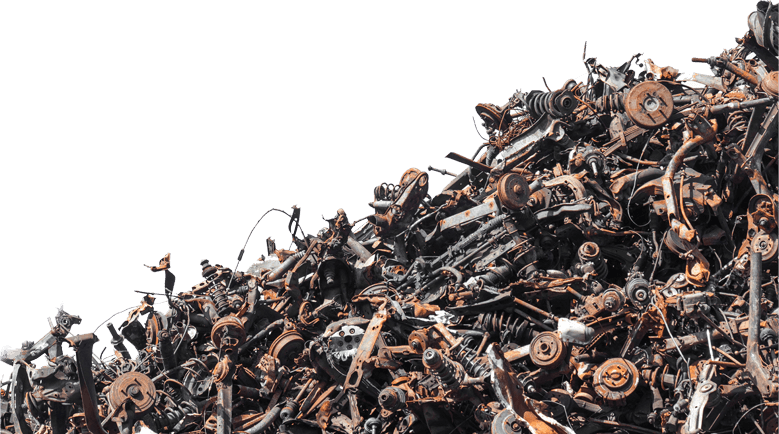
One of the most common elements in the universe and used in every industry on earth, it’s little wonder that steel is one of the most abundant metals in our Pakenham scrap yard. This week, to celebrate the importance of steel in our modern world, we’ve come up with 10 interesting things we guarantee you didn’t know about steel.

  1. 5 million steel cans are recycled in Australia every week

That’s enough to build 900 new cars but despite this, steel can recycling rates in Australia are very low at just 30.3.%. This is less than half the aluminium can recycling rate.

  1. Recycling steel as as opposed to manufacturing it from raw materials is about 75% more energy efficient

Recycling a tonne of steel saves 633kg of coal, 54kg of limestone, and 1131 kg of iron ore.

  1. Steel was being manufactured as far back as 4,000 years ago

During the antique period, steel produced in a clay smelting furnace or crucible. T­­he earliest ironware ever discovered dates back to 1800 BC. However, before the age of smelting, iron from meteorites was used to build weapons, tools, and cultural objects.

  1. There is a species of deep sea snail that has iron sulphide ‘chainmail’ on its shell

The only known animal to use iron sulphide as a skeletal material, the purpose of the ‘samurai’ snail’s armour is to repel predators.

  1. Steel is 1,000 times stronger than iron

It can be recycled over and over again without deteriorating. In fact, steel aged up to 150 years without losing any of it’s original strength.

  1. Steel is the second largest industry in the world

It has a US$900 billion annual turnover, which puts it only second to oil and gas. Japan, China and the United States are the leading producers of steel.

  1. Ned Kelly’s armour was made entirely out of iron

The Kelly Gang pilfered mould boards for plough shares and used a bush forge to bend them into the four iron suits they wore during their shootout. The armour was a quarter of an inch thick and weighed around 44 kilograms.

  1. Brass is stronger than iron

However, the Bronze Age gave way to the Iron Age because iron is much easier to work with.

  1. Steel is a finite resource

Some estimates suggest that there is less than a century worth of iron to produce steel with. Once steel runs out on earth, we may have to look at extra-terrestrial sources

  1. Steel was the material used to fabricate the first prosthetic arm in 1504

The prosthesis was for a knight, and could supposedly grip both a feather and a sword with it.

Metal Men Recycling are established scrap metal buyers in Melbourne. We accept all types of scrap metal as well as car batteries. To learn more about our services, please don’t hesitate to get in touch by calling 03 5941 6677.

Exploring the History of Barbed Wire

Metal inventions have played a fundamental role in shaping the modern world that we live in today. This week, we look at the history of one of the simplest, yet most influential metal inventions of the 19th century, barbed wire.

  1. The modern barbed wire design was first patented by Joseph Glidden in 1873. Legend has it that Glidden was coaxed into the idea by his wife Lucinda, who wanted a way to enclose their garden. The patented design was nicknamed ‘The Winner’, for a year after it’s creation.


  1. Barbed wire quickly became a popular way of defining land rights in the American West, as prior to it’s invention it was hard to contain cattle and enforce land ownership. Historians often single out barbed wire as the ‘invention that tamed the West’.


  1. However, barbed wire got rid of ‘the law of the open range’ in the West where cattle could roam free and access food and water, and cowboys could drive them to larger cities for sale and export. This caused tension between cattlemen and farmers and resulted in cattlemen forming fence cutting gangs.


  1. The invention of barbed wire also played a key role in the extinction of the buffalo population, as it reduced their access to grazing land. This in turn disrupted the Native American way of life that involved following the seasonal migration of the buffalo.


  1. Some nicknames for barbed wire include ‘the devil’s rope’, ‘bob wire’ or ‘bobbed wire’.
  1. In the early days of telephone technology, barbed wire fences were used as telephone wires in rural areas. In 1907, 18,000 independent telephone cooperatives were serving a million and a half people in rural areas around America through barbed wire telephone connections.
  1. Barbed wire was first used in a military context during the Spanish-American War by both the Spanish and President Roosevelt’s volunteer cavalry as a defensive tactic. It wasn’t until World War I that barbed wire was used as a weapon in trench warfare.

Metal Men Recycling offer cash for scrap metal in Melbourne and accept all different types and grades of scrap, including barbed wire. To learn more about our services, please don’t hesitate to get in touch by calling 03 5941 6677.
4 Iconic Steel Structures and Their Scrap Value

Once you take an interest in the value of scrap metal, you’ll find yourself assessing all sorts of things for their scrap value. This week, we take a hypothetical approach to the business of scrap metal collecting, by assessing four iconic steel and iron structures for their scrap value.

Eiffel Tower

Known to locals as ‘La Dame de Fer’ (the Iron Lady), the Eiffel Tower has watched over the vibrant streets of Paris since 1889 when it was constructed as France’s entrance to the world fair. Architect Gustave Eiffel elected to build the tower out of wrought iron to prove that metal is just as strong as stone, just lighter. The tower is made of 7,300 tons of wrought iron and in Australia, iron fetches between $0.08 and $0.16 per kilo, so if you had the opportunity to scrap this iconic Parisian landmark, it would net you somewhere in the vicinity of $8.7 million dollars.

Golden Gate Bridge

This suspension bridge contains about 88,000 tons of steel which makes up about 10% of it’s total weight. Most of the steel was used in constructing the two main cables, which are the largest ever spun and contain enough wire to encircle the earth and the equator over three times. In Australia, the price for steel is relatively high and ranges between $0.75 and $2.00 per kilo, so the scrap value of San Francisco’s beloved Golden Gate Bridge would be about $114 million Australian dollars.

Sydney Harbour Bridge

An elegant steel landmark in our own backyard, Sydney Harbour Bridge is made up of 53,000 tons of steel, most of which was used to construct its iconic arc shape. Constructed in 1932, most of the steel (79%) had to be imported from England, with the rest being sourced locally. If we ever wanted to do away with this classic piece of Australian architecture, it would bet around $69 million Australian dollars in scrap value.

The Titanic

Indisputably the most famous maritime tragedy of the 20th century, the Titanic was the largest ship ever built at the time and was ironically proclaimed to be unsinkable. 24,000 tonnes of steel were used to build the hull of the ship, with another 1500 tonnes used to make rivets. However, the steel used in the construction of the ship was inferior by modern standards and up to 10 times more brittle than the steel used to construct modern ships. From a scrapper’s perspective, this would put the scrap value of the steel substantially lower than the standard price. Add to this the significant corrosion from spending the last 104 years at the bottom of the North Atlantic Ocean, and the bacteria eating away at the metal, chances are you’d get next to nothing if you bothered to dredge up the Titanic and take it to your local scrap yard. In fact, scientists predict that the Titanic will be no more that a rusty stain on the ocean floor in 15-20 years’ time.

Metal Men Recycling are established scrap metal buyers in Melbourne. We accept all grades of steel scrap and guarantee a fair price. To learn more please call 03 5941 6677.

8 Facts About the History of Aluminium

This week, we take a closer look at one of the most common scrap metals to be found around our yard; aluminium. Used in everything from soft drink cans to aeroplane engines, aluminium has a versatility that few other metals can compete with and in this article, we uncover eight interesting facts hidden in the history of aluminium.

  1. The word ‘aluminium’ comes from the word ‘alum’

Alum is a Latin word that means ‘bitter salt’ referring to the crystalized double sulphates where alum is found in it’s natural state.

  1. Aluminium was not discovered until the 19th century

Although ‘alum’, an aluminium based salt was used throughout ancient times, aluminium itself does not occur in it’s pure form naturally, and requires both electricity and an advanced understanding of chemistry to produce. Because of this, aluminium was produced in it’s purest form for the first time in 1845.

  1. It was originally treated as a precious metal

Due to it’s silvery appearance and relative newness, aluminium was initially expensive and used for luxury items. In fact, the first aluminium products were war medals made during the reign of Napoleon III.

  1. Aluminium played a crucial role in the development of aviation

In the early 20th century, it was aluminium’s lightweight properties what allowed Wilbur and Orville Wright to build an engine both powerful enough to propel an aeroplane, and light enough to enable it to become airborne.

  1. Aluminium foil was invented in 1907

Chocolatiers were one of the first groups to use this technology on an industrial scale. In 1911, Theodor Tobler started to use the foil to package his new chocolate bar, the Toblerone.

  1. The first aluminium can was produced in 1958

This technology was developed in the UAW as a collaboration between an aluminium company and a beverage company who used the cans to sell beer. Coca-Cola and Pepsi did not begin to sell drinks in a can until 1967.

  1. China is the world’s largest producer of aluminium

Although Russia had been the largest primary aluminium producer in the world since the 1960s, the changing political landscape in the country meant that production slowed heading into the 21st century. In 2002, China exceeded Russia’s aluminium production, with all aluminium produced being used internally.

  1. About two thirds of aluminium ever produced is still used today

This is due to aluminium’s highly recyclable nature which enables it to be repurposed over and over again without degrading. Impressively, most aluminium cans are part of a ‘closed loop recycling’ process (where the object is recycled and remade as the same thing again) and takes just 90 days from the point of recycling to return to the supermarket shelves.

Metal Men are established scrap metal buyers based in Melbourne. To learn more about our capabilities, please get in touch with us by calling 03 5941 6

7 Unusual Facts About Copper

This week we continue our examination of common scrap metals by uncovering seven unusual facts about copper.

  1. Copper plays a key role in the human body

An adult human body contains between 1.4 and 2.1mg of copper per kg. Copper is a trace dietary mineral that can be found in the muscle, liver and bone. Foods rich in this trace mineral include broccoli, almonds, chocolate, soybeans, garlic, peas, seafood and whole wheat products.

  1. The word copper comes from the Latin word ‘aes cyprium’

Aes cyprium means “metal of Cyprus” and refers to the island where copper was mined during the Roman era.

  1. It is the oldest metal worked by man

Humans have been working copper for almost 8,000 years and utilized native copper created by naturally occurring chemical reactions. The oldest copper object (and therefore the oldest metal object) ever found is a tiny awl (leather working tool) dating back around 6,000 years to sometime between 5100 and 4600 B.C. Modern humans discovered how to smelt copper in about 4500 B.C, this marked the beginning of the Bronze Age.

  1. Copper is antimicrobial

It can kill bacteria, viruses and yeasts upon contact by disrupting the electrical charge of cell membranes. These properties have made copper a popular area of research in the medical field and is currently being tested to see if it can reduce the microbial burden in a hospital environment and thus reduce instances of infection.

  1. Ancient Egyptians made copper makeup

Copper played an integral part in the daily beauty routine of Egyptians, who not only used copper to create personal care implements such as razors and mirrors, but also used copper compounds malachite and azurite to produce vibrant green and blue eye makeup.

  1. Early electrical engineering would have been impossible without copper

The scientists who were pioneers in electricity relied heavily on copper as a transmitter due to it’s high conductivity properties.

  1. The Statue of Liberty contains 81,000 tons of copper

This iconic statue is covered in 80 tons of green verdigris (the green colour produced when copper is exposed to water and air) which is only 0.12 millimetres thick. Originally the statue was copper coloured and only became green in 1920, 34 years after it was constructed.

Metal Men Recycling accept all grades of copper and offer cash for metal scrap of all kinds. Contact us today by calling 03 5941 6677.

How to Get Rid of 4 Common Household Items You Can’t Throw in the Bin

If you live in Melbourne, then it might seem a bit ridiculous to you that you have three separate kinds of waste collection (and three separate bins to match) and yet there are still some things you can’t just roll out onto the front of your curb and be done with. Unfortunately, the reality of waste disposal and recycling is more complex than just dividing things up into general waste, green waste and recycling bins and in fact, the way that you dispose of certain things can have an impact on both the environment and human health. In this article, we take a look at four common household items which require special care when disposing of.

Batteries

Although some councils have begun allowing low mercury alkaline batteries to be thrown out with household waste, generally speaking, batteries of any kind should not be thrown into the bin. Batteries contain heavy metals, acid and lead which can leach from landfills and pose a threat to both the environment and human health. Whilst some scrap collectors like Metal Men Recycling accept car batteries, in most instances, they need to be disposed of at a hazardous household waste collection point.

Appliances

Household appliances contain a whole host of potentially harmful substances including refrigerants, HCFCs, CFCs, HFCs, mercury, and insulating foams, so they shouldn’t be placed into landfill. If they’re still function, investigate donating your old appliances to a charity. Broken down units are an abundant source of metal, so scrap metal buyers around Melbourne including Metal Men, will give you cash for them and even provide a pickup service.

Adhesives and glues

If they are disposed of whilst in a liquid state, adhesives and glues can contaminate the environment with solvents and toxic chemicals. If you only need to dispose of a small amount of glue or adhesive, simply open the container and allow it to dry out before throwing out, or spread out thin layers of adhesive on cardboard or newspaper until the amount left in the container is depleted enough to dry out on it’s own. Larger amounts will need to be disposed of at a hazardous household waste collection point.

Light bulbs

Light bulbs aren’t made of the same glass that food jars and bottles are made of, so they can never be recycled. If you have a broken light bulb, carefully wrap it in newspaper and place it in your general waste bin. However, if you have an intact bulb, CFL, fluorescent tube, of metal halides, then it’s possible to dispose of these through a specialised lighting recycling program. These programs recycle the lighting to recover valuable materials such as mercury, ceramic, glass, aluminium and phosphor which would otherwise go into landfill and in the case of mercury, pose a threat to the environment and humans.


The Best Places to Find Scrap Brass

One of the higher paying scrap metals, brass can actually be more profitable to hunt down than copper, as it is often used to create heavy fittings, pipes and casings whilst copper typically is used sparingly and therefore often takes a lot of time to collect a sellable amount. In this article, we take a look at a few choice spots to hit up if you want to turn a profit scrapping brass.

Central heating and air conditioning

HVAC projects aare one of the eaisiest places to source brass as old brass furnaces, radiators and water heaters are often an abundant source of this metal. Ideally, you’ll want to develop a relationship with a local HVAC business that regularly replaces old systems. Try offering free rubbish removal from their project sites in exchange for scrap.

Junk shops and flea markets

Brass has long been used as a decorative metal due to it’s warm, rosy tone, durability and relatively low cost. As a result, it’s not all that hard to source old brass fittings, plates, candlesticks, trophies, light fittings, bed frames, door knobs and decorative items in a junk shop or flea market for a pittance. Brass can become quite discoloured over time, so it’s important to really look carefully and be able to recognise the metal in it’s tarnished state.

Plumbing

For most of the 19th and 20th centuries, brass was a key material used in plumbing systems and there are still plenty of old houses around Melbourne with brass pipes and fittings which will eventially need to be replaced. Just like with the HVAC scrap, the best way to get your hands on brass plumbing is to develop a mutually beneficial relationship with a local plumber in your area.

Shooting ranges

Brass bullet casings are an abundant source of this precious scrap metal, so it’s well worth developing a relationship with your local range manager to see if you can organise shell collection at the end of each day or week.

As far as scrap metal buyers in Melbourne go, Metal Men are one the best companies to turn to if you’re looking to make some money from your scrap heap. We take all kinds of scrap metal and guarantee a fair price for whatever you happen to bring in. To learn more about our services, please don’t hesitate to get in touch with us by calling 03 5941 6677.

Thinking About Peak Metal

Metal is a vital resource to the progression and survival of humanity, but the earth contains a finite number of the raw materials needed to make these and at some point, we are going to run out. In this article, we take a look at exactly what peak metal is, and what that means for Australia, the world, and the scrap metal industry.

What is peak metal?

The idea of a resource ‘peaking’ was first put forward in the 1950’s by an American geoscientist who used it to describe the point where the maximum rate of petrol extraction would be reached in America. Lately, a number of Australian scientists have hypothesized that the same thing is likely to happen in our own country and eventually around the world, but this time with metal. Like oil, all metals are a finite resource which are either dug out of the earth in a raw mineral state and then refined, or mined in their elemental form.

When will peak metal occur?

Admittedly, given that the earth’s crust is made up of 32% iron, it’s unlikely that we would run out of the raw materials necessary to make steel any time in the near future. However, there are a number of other precious elements and minerals like gold, zinc, copper and silver, which are predicted to peak by the end of the century. Putting a timeline on when a particular metal will peak is hard, as there are many small mineral and element deposits around the world which simply aren’t economically viable to mine, but this could change in the future if the value of the metals goes up.

What happens if we do encounter mineral shortages?

Interestingly enough, the world already dealt with shortages of the mineral cryolite in the 1980s. Cryolite used to play a crucial role in aluminium production, but when the last viable deposit was mined in Greenland, researchers were able to find a new way of producing aluminium which didn’t necessitate this mineral.

Of course, science is not going to be able to replace the function of every mineral as it’s availability depletes, and this is where metal recycling will become even more important. Unlike oil, metal is recyclable, and in the future as minerals and elements become more scarce and mining becomes less economically (and environmentally) viable, metal recycling will come to play a central role in the way we source metals for our endlessly growing needs.

Metal Men offer scrap metal pick up in Melbourne and pay fair prices for a wide range of materials. Get in touch with us today by calling 03 5941 6677.

The Best Places to Find Scrap Copper

Even those with a rudimentary understanding of metal value know that copper is the holy grail of scrap finds. Although the scrap price of copper far outstrips all of the other metals, it’s one of the hardest to find and in this article, we uncover some of the best places to (legally) source scrap copper.

Old houses

Although PVC pipe is now the standard material used in household plumbing, there are plenty of old houses around the state that still use copper pipes. The best way to go about retrieving copper pipes is to get in contact with local plumbers so that they can let you know the next time they are removing it from an older property.

Thrift stores

Throughout the 20th century, different grades of copper were popularly used in a wide range of household products. If you walk into your local opportunity shop, chances are you’ll be presented with a veritable treasure trove of copper pots, pans, ornaments, utensils and furniture all available at rock bottom prices.

Auto parts

Car starters and alternators are both fantastic sources of scrap copper. Make sure you go to an auto yard that allows you to pick out your own second hand parts and buy them individually.

Roofing

Copper roofing aspects are a popular way of extending the lifespan of a roof and they are often discarded during remodelling projects. The best way to retrieve copper scrap is to get in contact with roofing contractors and offer to get rid of their scrap.

Household appliances

Almost all small and large household appliances have some copper wire in them and it’s relatively easy to extract. Refrigerators, stoves, and air conditioners in particular are great sources of copper as they require a larger power supply and therefore tend to contain thick insulated copper wire.

Computers and TVs

Television and computer monitors, as well as desktop towers are a fantastic source of insulated copper wires, but you have to take them out yourself as scrap yards don’t commonly accept the whole unit due to the time required to separate out the metals. Taking apart computer towers and monitors is relatively easy, and once you get in there, there’s plenty of insulated copper wire, connectors, and ribbon that you can remove with just a pair of standard paper scissors.

Metal Men Recycling are the premier scrap metal buyers in Melbourne. We offer a fair price for a wide range of scrap metal including all grades of copper. Get in touch with us today by calling 03 5941 6677.

5 Unconventional Places to Hunt For Scrap Metal

By now you probably know about common places you can look to find scrap metal around your home and business. Appliances, cars, renovation projects and electronics are all great places to find metal but at some point, your personal scrap sources are going to run dry and if you’ve caught the scrapping bug, chances are you don’t want to stop making money off scrap metal. In this article, we take a look at some of the more unorthodox places to find sellable scrap.

  1. Illegal dumping sites
    Urban and rural areas around Melbourne are littered with illegal dumping sites that careless people use to dispose of their refuse. Industrial neighbourhood, empty lots, and urban bushland are all commonly used as dumping sites and picking through these can turn up an abundance of scrap from appliances, car bodies, and general metal refuse.
  2. Shooting ranges
    Melbourne isn’t a place you would ordinarily associate with gun recreation but in fact there are more than ten shooting ranges within an hour of the city. Shooting ranges are a great place to source valuable brass scrap, but it will involve getting in touch with the operator and negotiating a free clean-up service in exchange for the metal refuse.
  3. Tradesmen
    If you’re serious about making cash from scrap metal, then it’s worth developing some business connections with tradesmen in your local area. Plumbers, air conditioning technicians and electricians discard tons of scrap metal in the course of their work, so it’s well worth offering a free clean-up service or getting them to tip you off when they’re working on a project with a lot of scrap.
  4. Construction sites
    Construction sites of all scales are a fantastic source of scrap but it is crucial that you have written permission prior to removing any scrap or refuse from a site as without it you run the risk of being accused of trespassing and theft.
  5. Medical care services
    Hospitals, aged care and assisted living centres, medical clinics and doctor’s offices are all great places to source a wide range of scrap metal in the form of bedframes, wheelchairs, walkers, obsolete machinery, and fixtures. The best way to gain access to a medical care faculty’s scrap is to meet with the administrator and offer to provide free scrap pickup and removal services in exchange for the metal refuse.

Metal Men Recycling are the premier scrap metal buyers in Melbourne and we’ll pay a fair price for your scrap. Get in touch with us today by calling 03 5941 6677.

The Secret History of Scrap Metal

Contrary to popular belief, scrap metal is a fascinating subject and no one knows this better than the team at Metal Men Recycling. This week, we’ve dug deep into the archives to find three unconventional stories about scrapping and recycling which are guaranteed to fascinate even the most jaded of readers.

Scrap metal played a major role in Britain’s war effort…. maybe

During World War II, Londoners took part in an enormous scrap metal drive where the iron doors and railings surrounding parks, houses, shops, and public buildings was taken away to be melted down and made into munitions, aircraft and tanks. Almost everything metal was rationed during this time and there were scrap drives to collect everything from aluminium pots and pans through to copper ornaments. The general consensus amongst historians however, is that a lot of the metal collected, particularly the iron, was never recycled as weapons of war and that instead, the drive was an elaborate propaganda scheme designed to keep the citizen’s morale high. The fate of all the scrapped metal is also subject to conjecture. Popular theories include that it was dumped in the Thames, that is was used as ship ballast for vessels leaving the Port of London, or that is was shipped overseas to Nigeria and Guyana.

A conman sold the Eiffel Tower to scrappers, twice

In 1925 a con man called Victor Lustig invited six scrap metal dealers to a confidential meeting at a hotel to discuss the Eiffel Tower, which was well known to be in a state of disrepair and extremely expensive to maintain. Lustig introduced himself as a government official and told the businessmen that the city of Paris could no longer afford the upkeep of the then 26 year old monument and that he had been instructed to sell it as scrap metal. Next, he took the group of men in a limousine to view the tower (and so he could see which businessman was the most gullible and vulnerable) and told them to submit their bids the next day, emphasising that it was a state secret. The next day, Lustig managed to extract money for the Eiffel Tower but also a large cash bribe from a man named Andre Poisson who after Lustig escaped, was too embarrassed to go to the police.

Lustig tried to pull off the same con a month later but the businessman he chose to sell to this time took the counterfeit documents to the police before the deal was closed. Surprisingly, Lustig escaped and went on to con famous American mob boss Al Capone.

Ancient Egyptians had no qualms about recycling graves

Whilst this is not technically a story about metal scrapping exclusively, it’s an interesting historical footnote nonetheless. In ancient Egypt, the elaborate funerary processes and afterlife preparations which the culture is famous for were actually part of an illicit coffin recycling trade. Recent research suggests that many coffins were made with pieces of older coffins which had been extracted by tomb robbers. Tomb robbing was incredibly common in ancient Egypt and the scarcity of the materials which were lavished upon the dead like metal, gemstones and wood meant that the trade in recycled coffins was quite lucrative.

10 Facts About Scrap Metal Recycling That Will Make You Think

We all know recycling is important, but often the message of just how important it is, and how big a difference an individual contribution can make is underplayed. To help you get a better idea of just how much recycling (even on a small scale) can benefit the planet, we’ve put together a list of 10 insightful facts about scrap metal recycling.

    1. Aluminium was only discovered in 1825
      Although it was only discovered 191 years ago, it is the most abundant metal available on earth and highly recyclable. About two thirds of all the aluminium that has ever been produced is still in circulation.
    2. Recycling just one aluminium can saves a lot of energy
      The energy saved from recycling just a single aluminium can could be used to continuously run a 100-watt light bulb for around 20 hours, a television for two hours, and a computer for three hours.
    3. Steel is the world’s most recycled material
      It can be recycled infinitely without deteriorating and recycling steel consumes around 60% less energy than it takes to manufacture virgin steel from iron ore. It is thought that almost every steel product on the modern market contains at least some recycled steel.
    4. Scrapping your car saves tons of raw material
      Giving your car to the scrapyard instead of the junkyard saves around55 kg of limestone, 635kg of coal, and 1134kg of iron ore; that’s nearly two tonnes of raw material!
    5. It takes between 200 and 500 years for an aluminium beer can to decompose
      But in 2010, Australian’s only recycled some 67.4% of the 3 billion aluminium cans they used.
    6. Australians waste a lot of steel
      It is estimated that every year, Australians send enough steel to landfill to make 40,000 fridges. Steel cans, cars, and old or broken appliances are some of the most common things we throw away instead of recycle.
    7. But we’re still one of the most prolific recyclers of household waste
      98% of Australian households are reported to participate in some form of recycling. This means a waste diversion rate of over 40% which is higher than that of Canada, England, and the United States.
    8. 98% of a car battery is recyclable
      But despite this, around 90% of batteries are not recovered and this is a problem because batteries that are sent to landfill release all kinds of pollutants which threaten both the environment and human health.
    9. It takes just 60 days to put a recycled aluminium can back on the shelf
      Aluminium cans are generally part of closed loop recycling where the recycled product is turned into the same thing once again. The closed loop means that it takes just two months for the metal to be recycled, repurposed, and placed back on the supermarket shelf.
    10. The US is one of the world’s most prolific copper recyclers
      In fact the amount of copper recycled in the US every year could be cast into 25,000 Statues of Liberty.

If you’re looking for a place to get cash for scrap metal in Melbourne, look no further than Metal Men. We offer 24-hour pickup and will take any amount or type of metal including car batteries. Call us today on 03 5941 6677.