How Recycling Can Help Your Business Succeed

It’s no secret that the planet is in turmoil, and despite increased public awareness around ‘going green’, reducing our energy consumption and changing our waste management strategies, little seems to be changing for the better. We’re encouraged to do our part as individual consumers, and every small act definitely does make a difference. But things have to change on a larger scale. In this week’s blog, we’ll be discussing the ways in which recycling can help your business succeed.

business recycling

Public recycling

Modern urban recycling was born in the 1980s, as a way to deal with the waste that began to accumulate through the second half of the 20th century. In more recent years, the Australian government and other various organisations have been working to encourage the public to recycle our waste, and as of 2009, 98% of households reported that they recycled waste [ABS 2009]. These initiatives have ultimately been successful, and has created a huge supply of recycled materials such as scrap metal as a result. But there is one key problem; where does all of this material end up?

Environmentally focused business 

Metal recycling is a modern day industry in itself, and every industry or business is founded upon the basic supply and demand model. And the success of recycling lies equally in both driving businesses and consumers to recycle their waste, and in creating a market for the supply of materials created. Business leaders in this area are those that challenge recycling myths, and make environmentally focused research and development part of their business ethos. Through this, they’ve reduced waste, increased profit and more importantly, begun to pave a path for the future of recycling.

In order to truly improve our recycling processes, we need to not only revolutionise the way that we think about recycling, but also the way that we think about our households and businesses. Metal Men Recycling are trying to close this gap, by offering a 24-hour pickup service, as well as cash for scrap metal for businesses. To learn more, don’t hesitate to get in touch with us.
How To Remove Rust From Metal 

The discovery of rust can be off-putting at first. However, rust is nothing to be afraid of but is rather a natural development of leaving metal objects outside over time. If you have found that your metal objects have developed a layer of rust, there are some easy things you can do to remove it. In this week’s blog, we share our top tips for removing rust from metal. 

Tip One: Scrub Off The Rust 

The first thing you can do after finding rust on your metal is to grab a wire brush or piece of steel and use it to scrub off all the loose rust from the metal’s surface. Make sure to scrub rigorously. If the stain is relatively large, this method can help remove approximately 50% of the rust. 

Tip Two: Use White Vinegar 

After this, find a bottle of white vinegar and pour some into a glass. Next, place your metal objects into a container with the white vinegar and allow them to soak for a few minutes before drying with a rag. This will help erode the rust. For large stains, soak the rag in vinegar and use it to scrub the metal object. Finish off the vinegar soaking process by scrubbing clean with a wire brush or steel wool. 

Tip Three: Baking Powder and Lemon Juice 

If the rust stain is heavy, try adding baking powder and lemon juice to the vinegar. This will intensify the strength of the solution, hopefully lifting off the stain even further. Apply the mix to the metal object as explained above. 

Tip Four: Apply a Finishing Wax 

After removing the rust from your metal objects, prevention of further rust is key. Apply a finishing wax or even paint the surface to avoid rust reappearing.  

At Metal Men Recycling, we provide cash for scrap metal. We have over 50 years collective experience in the metal recycling industry. To trade your scrap metal today, call us at 03 5941 6677.  

3 Reasons To Love Copper

Copper, with its unique colouring, is one of the most visually appealing metals found on our planet. Found as element number 29 on the periodic table, copper is present as both a chemical compound and in its pure form. Considering that the average home contains 400 pounds of copper, it’s pretty likely that you’re surrounded by copper as you read this! It’s an invaluable metal to recycle, so in this article we’ll be getting to know copper a little better.

copper

Unique properties

As element number 29 in the periodic table, copper is a mineral that is essential to our everyday lives. With high malleability and ductility, copper is highly resistant to corrosion and adept when it comes to thermal and electric conductivity. For these reasons, copper is used in electric wiring, plumbing, electronics, transportation and building construction.

Natural antibacterial agent

Because of the antibacterial properties in copper, it can be used to control algae. It can also be used in our daily lives for this purpose. It’s pretty common to use brass for door knobs- copper is a metal that easily alloys with other minerals, and brass is a result of this. Copper is also toxic to invertebrates, so it’s often used on ship hulls to prevent mussels and barnacles from attaching to the ship.

100% Recyclable

Did you know that 80% of copper that has ever been mined is still in use today? As a metal that is 100% recyclable, copper is incredibly useful to humans and has endless uses. It’s also abundant in the Earth’s crust, at a high concentration of 50 parts per million. For this reason, copper is the third most used metal in industrial construction, behind iron and aluminium.

For a final fun fact- if your hair has ever turned green after swimming, that’s actually because copper is present in the water, not chlorine. While this certainly can be frustrating, copper is one of the most valuable metals found on Earth.

As a well established, local business, Metal Men Recycling offer cash for scrap metal, with a 24 hour pickup service. Get in touch by calling 03 5941 6677 for more information today.

Easy Ways to Teach Your Kids Recycling 

It’s never too early to teach your kids the importance of recycling. In fact, learning and implementing recycling measures in your home can be a fun and creative process for your little ones. In this week’s blog, we discuss four easy ways to teach your kids recycling. 

Kids Recycling

Find books 

The first step you can take to teach your kids about the benefits of recycling is by finding some books which address this matter. Some great ones include, “Don’t Throw That Away!: A Lift-the-Flap Book about Recycling and Reusing”, “Michael Recycle” and “I Can Save the Earth!: One Little Monster Learns to Reduce, Reuse, and Recycle”. After you’ve read the book, discuss and reflect on the ideas presented so your child or children understand why we should recycle and how it can positively affect our planet.  

Get Creative with Personalised Bins 

Now that your kids understand the importance of recycling, it’s time to get started on some fun recycling projects. A personalised recycling bin is a great activity to get the kids involved in. They can decorate them however they want with a label of what goes inside each bin. This is a perfect way to ensure your children don’t get too overwhelmed or confused.  

 Turn It Into a Game 

Recycling can be both educational and fun. Make recycling a game by turning old water bottles into the classic carnival game. You can also transform old items into toys.  

 Visit Recycling Centre 

A recycling centre is a great place to learn all about where recycled material goes. In Melbourne, there are lots of great recycling companies. At Metal Men Recycling, we recycle scrap metal and have been for over 50 years. Call us at 03 5941 6677 to talk to one of our friendly staff members today.  


4 Things You May Not Know To Recycle

When it comes to helping the planet, we’ve all got to do our bit. Recycling is one of the best ways to do this, but as we all know, contaminated recycling is bad. Simply put, mixing non recyclable materials with recyclable materials can mean that all of it heads straight to landfill, and no one wants that! Second to contaminated recycling, the biggest problem occurs when recyclable material ends up in the waste bin. So in this week’s article, we’ll be running through 4 things that you may not know can be recycled.

Pizza Box

Bottle tops

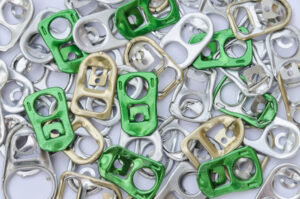
It’s true that when bottle tops are put through recycling on their own, they can cause a bit of a problem for the sorting equipment at the recycling facility. But with a little foresight, the humble bottle top can actually be recycled for the better! One of the easiest ways to do this is to save them up in a used can, and then crimp the lid to the tin when full. In an aluminum can, the aluminium bottle tops will be treated the same.

Take-away containers

When it comes to food packaging, it can be difficult to determine whether or not it’s recyclable. From pizza boxes, to Chinese takeaway boxes, grease often found in this sort of packaging can cause issues. But actually, as long as there’s no leftover food in the box, with a light wash these plastic containers are good to go.

Aluminium foil

Similar to take away containers, aluminium foil from food packaging such as yogurt, or materials used in household baking, can be recycled as long as it’s rinsed! Just make sure that the aluminium is collected together, rather than floating around as singular pieces as this can be difficult for sorting equipment to process. A suggestion to remedy this is to scrunch all your aluminium foil into a ball before putting it into recycling.

Aerosol cans

For some reason, there’s a certain assumption that aerosol cans can’t be recycled. But don’t worry- they won’t explode when they’re recycled! They’re made of steel and aluminium, and most recycling facilities will have no problem processing them. The only caveat is this- they must be empty, and free of as much of the plastic as possible.

Metal Men Recycling are all about creating a better future for our planet. As a family owned company in the eastern suburbs of Melbourne, we provide cash for scrap metal. Get in touch by calling 03 5941 6677 for more information today.

Four Ways to Reduce Waste

Whether you’re an eco-warrior or part-time environmentally conscious shopper, there’s plenty we can all do to help our beloved planet. When it comes to reducing waste, there are a few easy steps you can do on your own. In this week’s blog, we share the top four ways to reduce waste.  

Reduce Waste

Use reusable items

Whenever possible, remember to use reusable items like bags and containers. By choosing refillable, reusable or returnable products over single-use items, you help reduce a massive amount of unnecessary waste. Small changes really do make a big difference. So think of investing in some everyday reusable items, such as a keep cup to help the environment.  

Compost

Composting your food scraps is a great way to decrease waste. So much of our waste that enters our bins is food. This food then enters our landfills, which produce methane: a greenhouse gas 20 times worse than carbon dioxide. By starting a worm farm or compost bin at home, you can prevent unwanted waste ending up in our landfills.  

Shop at second-hand stores 

The constant creation of clothing bears a massive load on our resources. Instead of contributing to this endless production, try shopping at second-hand stores. Here you can find quality clothing that is not only quirky and cheap but also kind to our planet.  

Recycle scrap metal 

Did you know that recycling scrap metal reduces air pollution by 86% and decreases consumer waster by 105%? In fact, recycling scrap metal helps reduce chemical and visual pollution. It also decreases the need for landfill sites, resulting in better air, water and land quality. Although not something you may usually think of, recycling scrap metal is a great way to save our energy and help our planet. 


At Metal Men Recycling, we provide cash for scrap metal to create a better planet for our future. We are a family owned company located in the eastern suburbs in Pakenham with over 50 years combined experience. For more information, call us at 03 5941 6677.  


10 Things To Do With Scrap Metal Around The Home

Scrap metal is a valuable resource, and many of us may not realise how much we have lying around in the home. In this article, we’ll be going through 10 things you can do with your scrap metal today.

  1. Make a tin can telephone by removing the lids from two coffee tins and tying a long piece of string between the two to create the desired effect. Then, sit back and let the kids enjoy!
  2. Using an old steel can, place any steel bottle tops or jam jar lids inside for a fuss-free storage solution for your metal in the home. When the can is full, you can toss it into your recycling bin all together.
  3. Place jam jar lids under the legs of your couch or bed to prevent your furniture from scratching the floor.
  4. Create a piece of art by bringing together different recycled elements. This can become a fun, rainy day activity for the kids that promotes creativity and sustainability- what more could you want?
  5. Turn aluminium cans into mini plant pots, and create a herb garden in your very own kitchen. After washing the cans, place soil into each container and add water to make the environment moist. Following this, add herb cuttings or seedlings into each container, and allow them as much natural light as possible.
  6. Donate pots and pans to charity and opportunity stores where possible, rather than throwing them out. This means there’ll be a higher chance these household items go to a good home, rather than wasting away in landfill.
  7. Make a windchime with old silverware; begin by drilling holes through each of the handles of the silverware, and then attach them to a central fork or spoon with string, wire, or any material of your choice.
  8. Spray paint old metal frames with a new colour of choice, for an updated way to display memories with your loved ones. Make sure to do this outside, as the fumes can be quite toxic!
  9. Create two bookends using scrap metal found around the home; with some basic welding material, you can turn your scrap metal into functional pieces of art for your bookshelf.
  10. Exchange your scrap metal for cash; Metal Men Recycling offer a 24-hour pickup service for scrap metal, and will give you cash in return.

With over 50 years of experience in the metal industry, you can’t go wrong by calling Metal Men Recycling on 03 5941 6677 to get cash for scrap metal today.

All About Aluminium

For some of us, when we hear the word aluminium, the first thing we think of is the material used to wrap around potatoes when cooking on the barbeque. But there’s a lot more to this special element. In this article, we’re going to give you the low-down on aluminium.

Cans Recycling

What is it?

As the second most common element on the planet after silicon, aluminium makes up 8 percent of the Earth’s crust by weight. In nature, it’s found as bauxite, which is a mix of aluminium oxides, iron oxides and clay, and is then manufactured into a metal through a complex process that involves purifying the organic matter.

How is it used?

It’s super lightweight, and is found in soda cans and other packaging, automobiles, aircraft, technological devices, just to name a few of its uses. Because it’s so abundant, it’s often one of those metals that are taken for granted, but benefits of aluminium can’t be denied. It’s easy to fold, mold and recycle, and as such, is one of the best materials if you’re looking to exchange scrap metal for cash.

How is it recycled?

Aluminium is 100 percent recyclable, as none of the quality of the material is lost during the process, and can be recycled infinite times. The recycling process uses only 5 percent of the energy required to make aluminium, and emits very little greenhouse gas comparatively. By recycling aluminium, you reduce the levels of waste in landfill, reduce energy use, and reduce the need for raw materials.

Crazily enough, about 75 percent of the aluminium ever made is still in use thanks to recycling. Make sure you exchange your aluminium, and get cash for scrap metal like so many others have. Metal Men Recycling offer a 24 hour pickup service, which can be arranged for your home or business, depending on your needs. Call 03 5941 6677 for more information.

How Recycling Scrap Metal Helps The Environment

We all know recycling is important. But did you know the impact recycling scrap metal can have on our environment? In this blog, we break down the top four ways recycling scrap metal helps our planet. From reducing air pollution by 86% to decreasing consumer waste by 105%, there’s a lot to be gained from recycling scrap metal. 


Recycling metal helps reduce chemical pollution

Chemical pollution is a major problem for our planet today. Although there are many forms of chemical pollution, the term generally refers to the process by which chemicals are released into our environment, disrupting the balance of our ecosystems, polluting our air, threatening our health and contaminating our food. By recycling scrap metal, we reduce the need to ship metal from other countries, which decreases the fuel and emissions caused by long-distance transportation.

Decreased need for landfill sites

Landfill sites are one of the largest sources of chemical and visual pollution. In Australia, there is a heavy reliance on landfill as a form of waste management. In fact, between 2007 and 2007, the volume of waste deposited to landfill increased by 12%. But by recycling items such as scrap metals, we decrease the need for landfill sites, resulting in better air, water and land quality.

Recycling scrap metal helps prevent visual pollution

Metal is produced through mining metal ores. However, most metals are found in barren areas. By recycling scrap metal, we can reduce mining and the subsequent destruction of wildlife and formerly pristine landscapes. This will lessen the overall visual pollution involved in metal mining.

Less energy is used

Generating metal for raw materials is incredibly energy intensive. In fact, it takes approximately the same amount of energy to make 20 cans from recycled metal as it does to make one can from raw materials. By using recycled metal instead of natural resources, one can save more than 75% on energy bills for metals such as aluminium and copper.

While global warming hasn’t stopped, it’s on the decline. Due to efforts, such as recycling scrap metal, we can continue on this trajectory. 

At Metal Men Recycling, we’re passionate about creating a better planet for our future. As expert scrap metal buyers, we help our planet and you by providing cash for scrap metal. To be part of the change, contact us at 03 5941 6677.

Metal Recycling: How Does Australia Stack Up?

Many young Australians won’t remember a time when the humble aluminium can was thrown away, rather than recycled. For many reasons, scrap metal has become increasingly common in Australia as an innovative way to meet society’s needs by reducing carbon emissions, and to sustainably manufacture more consumer goods that require the use of metal. In this article, we’ll be going over where Australia stands when it comes to recycled metal.

Can Rings

The Rest Of The World

The EU, Japan and Korea all have legislation in place to recycle metals. This may be down to the economic factors, but there’s also a certain level of awareness from both politicians and consumers regarding sustainability. In the EU, there’s a focus on ‘end-of-life’ considerations, particularly when it comes to the car industry. This also applies to consumer goods across various industries, and the onus is on the manufacturers, rather than the individual consumer, to shift to more recycled or recyclable products. When looking at OECD countries, Australia lags behind, but that’s not to say we don’t have any plans in place at all.

The National Waste Policy

Run by the Department of Environment and Energy, the National Waste Policy is an efficient, environmentally focused approach to waste management in Australia. With a focus on six key areas, the policy aims to ask government bodies, businesses and individuals to take responsibility for sustainability. Its aims centre on the management of waste as a resource, the reduction of greenhouse gas emissions, improvement of waste disposal and treatment strategies, and serves to increase energy conservation procedures. Beyond these aims, an essential element is the reduction of the amount of waste in general, and to focus on cradle-to-cradle lifecycles for consumer goods.

Many of our resources such as oil and coal are going to run out eventually, so it’s imperative that we increase our efforts to recycle and deliver more sustainable outcomes. Ultimately, change comes from the individual, so if you’re environmentally inclined, get in touch with Metal Men Recycling on 03 5941 6677, who will give you cash for scrap metal.

What Happens to Your Recycled Metal

Have you ever wondered what happens to your recycled scrap metal? In this week’s blog, we examine a few of the common uses for commonly recycled scrap metals such as copper, aluminium and steel, so that you can be sure your scrap is being put to good use. Here are six different ways scrap metal is re-purposed.

Industrial use

Scrap metals like iron and steel have many varied industrial uses, from the construction of public infrastructure like roads and bridges to transportation (including in the manufacture of trains, ships, and aircrafts). Cast iron also has uses in construction as a decorative material, and is often used to make things like hardware, balustrades, eaves and plaques.

Furniture

Furnishings and home fittings like benches, tables, lamps, chairs, light fittings, bed frames and door handles are frequently made from recycled scrap metal. Metal furniture, when made well, is very sturdy and can last for many years.

Artistic use

Considering many artists are concerned with sustainability, it makes sense that they try to use recycled materials wherever possible. Scrap metal is often used in artistic works such as sculptures, decorative metalwork, installations and jewellery, which make their way into private collections to be treasured for many years, or instead are featured around cities as public art.

Residential

Many recycled metals are commonly used in residential construction, with copper often being used as a plumbing material, in electrical wiring, roofing sheets and heat exchanges. Steel is also a common construction material, used to make house frames and roofing structures.

Electronics and whitegoods

Metals are also commonly used in the manufacturing of electronics, including in wiring and in the overall structure of large items such as fridges and washing machines. By recycling your old whitegoods and electronics, you are contributing to the sustainable creation of new goods.

Metal recycling plays an important role in sustainability. If you have scrap metal goods you’d like to trade in, contact Metal Men Recycling. We accept all kinds of scrap metal and are committed to sustainable practices.

5 Recyclable Products that you Can’t Put in Your Council Recycling Bin

Most local councils in Australia only have the resources to recycle certain materials (usually paper, glass, aluminium and steel) but there are plenty of other products and materials which can be recycled with a little extra effort.

  1. Car batteries

Classified as hazardous waste, car batteries as well as lead acid batteries contain a range of toxic compounds including lead, sulphuric acid and lead compound which if allowed to leach into the environment, can cause unspeakable damage. The good news is around 98% of lead and car batteries can be recycled and mechanics, service stations, and scrap metal dealers (including us) all commonly offer recycling services.

  1. Printer cartridges

Toner and ink cartridges from printers often end up in landfill but in fact they can be recycled into new cartridges. Officeworks, some Australia Post outlets, Harvey Normal, JB Hi-Fi, Office National and Office Products Depot are a few of the places you can recycled your old cartridges.

  1. Corks

Although corks used to be repurposed by cork flooring manufacturers, the proliferation of corks adulterated with resins resulted in inferior products and so they are no longer accepted. However, there are plenty of fun crafty ways to repurpose corks.

  1. Mattresses

Although used mattresses are generally not accepted by charity organisations, some organisations recycle mattresses for their components (wood, springs and foam) or clean them to provide a low-cost bedding option.

  1. Shopping bags and soft plastics

Although they are not accepted by most council recycling programs, selected supermarkets have a soft plastics recycling scheme (run by REDcycle) which accept things like food packaging, lolly wrappers, newspaper wrappings and cling film as well as plastic bags. Most supermarkets now accept plastic shopping bags as well as damaged reusable green bags.

Metal Men Recycling metal recycling services in Melbourne. We recycle all types of metal as well as car batteries and offer competitive prices. To learn more about our services, please don’t hesitate to get in touch with us by calling.