3 Ways To Reuse Household Metals

Chucking out some coat hangers, copper wire or metal cans? Have you thought about giving them a second purpose instead? There is a surprising amount of ways to reuse metals that we’d normally throw away without a second thought. You can turn it into practical items like storage and holders, or let your creativity run wild and create art that will brighten up your home. In this blog, we are going through the creative and fun ways you can turn your metal trash into treasure.


Metal Cans

The possibilities for using metal cans around your home are practically endless. With a fresh coat of paint or punching a few holes, your metal cans could be the pride and joy of your home. Here are some things you can turn your cans into:


  • Lanterns: just carve out some holes and put in a candle
  • Pen holder: just clean out a can and paint it, then you have a cute new holder for your pens, paint brushes or anything else
  • Cookie cutters: if you have a soda can then you can bend into cute shapes for your baking
  • Metal flowers: you cut the top on the can then cut vertically to make petals
  • Jewellery: you can cut and bend cans into pendants and bracelets


There truly is so much you can do with cans; the only limit is your imagination.


With the right know how you can turn plain old cans into a brilliant work of art. In fact, metal can art can be incredibly stunning, just check out Noah Deledda’s work. Scrap metal art takes a bit of fiddling but it’s an art form for everybody. You can start by cutting the metal into animal and geometric shapes and go from here.


Copper wire


Copper wire is easily bent and shaped into beautiful art. Because it is sturdy, aesthetically pleasing and malleable it’s a sort after material for artists. It is good for making a strong base and framework for sculptures. Your new ground-breaking, soul-inspiring artwork will hold together with decent copper wire.

If you don’t mind a bit of arts and crafts copper wire can be used to upgrade your décor. For starters, you can use it to replace string for hanging up picture frames, artwork and mirrors. If you hang a metal peg off some copper wire you have a new way to put reminders around the home. You can even use it to hang pot plants! If you’re extra crafty you can turn copper wire into candle holders, napkin holders, baskets and Christmas decorations.


Also, with the right copper wire, you can set up some fascinating and cool science experiments for your kids. You can start with a simple copper wire and battery experiment and go from there. Copper wire is conductive and is a key element in a lot of electromagnetic experiments.


Coat hangers


If you’re about to replace or throw out your coat hangers hold your horses. You can use coat hangers in other ways around your home. All you need is a decent pair of pliers. There are plenty of life hacks with coat hangers that will make you want to hang onto them:


  • Towel holders
  • Pot lid holders
  • Magazine wrack
  • Tablet holder
  • Pot plant holder
  • Bowls
  • Wreaths and decorations
  • Frame for vines, tomatoes and other plants


Just like with copper wire, you can use metal coat hangers in your art. For example, they can be easily be bent into frames and stands for sculptures. Start playing around and see where your creativity takes you.


The right kind of scrap metal can be traded in for money, so don’t miss out on earning some extra cash for recycling. Metal Man Recycling buys scrap metal and can even pick it for you to save you the hassle. Don’t hesitate to get in touch with us on 03 5941 6677 today.


10 Items You Can Recycle for Profit

Now that China has placed an import ban on 99% of recyclables that they used to buy from Australia, our country is facing a serious waste management problem. Whilst on the individual level, this may not have a direct or immediate effect on you, it does highlight the value of recyclables and the increasing importance of managing our waste in an ethical manner. In this blog, we thought we’d take a look at 10 items which the average person can recycle for cash. After all, who can say no to turning a profit and doing something good for the planet along the way?

Making money

Scrap metal

Top of the list is of course, scrap metal recycling. Metal Men Recycling accept both ferrous and nonferrous metals in all quantities and conditions. We offer free bins and 24 hour pickup services anywhere in Melbourne.

Bottles and cans

New South Wales, the Northern Territory and South Australia all currently have container deposit schemes where you can exchange containers for payment. The ACT and Queensland will both have schemes established by the end of 2018 whilst Western Australia’s scheme is scheduled to start on 1 January 2019. Victoria and Tasmania on the other hand, currently have no plans to start a container deposit scheme, so unless you want to take an interstate road trip with a boot full of cans, the best thing you can do is lobby the Victorian Minister for Environment and Climate Change, the Hon Liliana D’Ambrosio, whose details can be found here.

Car batteries

Metal Men Recycling accept car batteries and guarantee a fair price for your item.

Old cars/machinery/caravans

Because of their size, vehicles might look like daunting objects to get rid of but it’s really incredibly easy. All you need to do is give us a call on 03 5941 6677 and we’ll organise a time for one of our team to come out and collect your vehicle for free. We’ll pay you a fair price and guarantee our services are a simple and stress free way to dispose of unwanted vehicles in any condition.

Ink cartridges

Ink cartridges from printers are a hot commodity which can be exchanged for up to $15 per cartridge in some circumstances. Companies like QPCA offer free pickup and cash payments in exchange for your old cartridges.

Electronics

Because electronics like computers and mobile phones have valuable parts which can often be salvaged or refurbished for re-sale, many companies are willing to buy old, non-working laptops and mobile phones for a fair price. Alternatively, many of the big electronics brands like Apple, Dell and Acer have electronics recycling programs where they will exchange your old brands items for a discount on a new model.

Hair

Thinking of getting a spring haircut? Before you make an appointment at the hairdressers, take a minute to consider this unusual recycling opportunity. There’s a huge demand from wigmakers for human hair and if you have long, undyed hair, it can be sold for hundreds of dollars. Some companies will buy the hair off you but if you are willing to put in a little time and effort, you can earn significantly more by selling your hair in a niche online marketplace like HairSellon.

Corks

The internet is in the midst of a DIY craft craze and that means that corks are in popular demand. eBay is a fantastic place to get rid of your old corks in bulk to crafting fanatics. Corks go for about 10c a piece but can fetch more if they are from a specific winery or a specific variety of wine or a particular vintage. It’s worth doing a little bit of research regarding marketing, packaging and shipping before you make your listing. A word to the wise though, champagne corks aren’t a huge hit on eBay due to their irregular shape.

Stockings and hosiery

Instead of throwing your ripped and pilled stockings into the bin and sending them to landfill, send at least three pairs to Swedish Stockings and they’ll email you a 10% discount code which you can use to buy a new pair of sustainable hosiery.

Lighting waste

Households and businesses who are registered with The Victorian Energy Efficiency Target (VEET) are eligible for a rebate if they recycle old inefficient lighting such as halogen lights and fluorescent tubes and replace them with more energy efficient options. This is just one of dozens of activities which businesses and households can undertake in exchange for a Victorian Energy Efficiency Certificate (VEEC) which can then be  sold onto companies who need them for a profit.


How To Recycle: Farm Edition

Farm cleanups are a big job, particularly because there are so many different categories of rubbish and waste that can be found on them. It can be very tempting to just heap everything in a big pile and send it all off to landfill, but in reality, this is terrible for the environment. Never fear! In this blog, we’re running through some different recycling tips you can use to clean up your farm or barn, from reusing barn wood to opting to sell scrap metal.

Recycling garden

Know what cannot be recycled

Before you begin your recycling journey, you need to know exactly what items on the farm you cannot recycle. Not only does this protect you from breaking local council rules, but knowing which items are unrecyclable can protect the environment and the health of anyone on or near the farm.

Take care not to recycle these items:

  • Asbestos or materials containing asbestos
  • Empty chemical drums or used containers that do not have the drumMUSTER program sticker
  • Excess or unwanted chemicals
  • Household waste that cannot be composted
  • Treated timber that cannot be reused

Many of these items must either be disposed through landfill, or disposed of through organised collection. For example, Chemclear is a chemical collection organisation that you can contact to remove excess or unwanted chemicals from your farm or site. If you are unsure how to dispose of an item that is non-recyclable, contact your local council for advice.


Use barn wood to create furniture

Bring the farm to your home! Barn wood is a fantastic reusable resource that can be used to create some stunning rustic pieces of furniture. You can make lots of things out of barn wood, from tables, to mirror frames, to wine bottle displays, to towel racks. There are thousands of ideas on the Internet; the sky is the limit!

There are a few things you need to check before you begin your exciting barn wood DIY:

  • Inspect for any metal (such as nails) that might still be in the wood. These should be removed immediately or they can dull down your saw blade.
  • Check for bugs. Depending on the kind of wood you have, it may be prone to infestation, and you definitely don’t want that in your home. You can treat the wood with insecticide or another recommended solution.
  • Make sure the wood is clean. Loose dirt can be scrubbed off using a stiff bristle brush, but finer dirt needs to be sprayed out using water.


Either reuse or recycle masonry waste

Masonry waste includes items like bricks, tiles and concrete. Before you decide what to do with the masonry waste, always double check that it is free of dangerous chemicals (such as asbestos).

Once you have confirmed that your masonry waste is safe for reuse, consider the number of ways you can repurpose it, including:

  • Using it to rebuild or repair areas of the farm
  • Crushing and using it to create tracks, bases or paths

It is very important to note that illegally dumping or disposing of masonry waste in an unapproved area can cause you to face huge liabilities. Not only that, but the waste can break down and contaminate nearby groundwater sources. This is extremely bad for the local environment and surrounding eco-system.

If it is not possible for you to reuse your farm’s masonry waste, you need to contact a collection service that will help to recycle it for you instead of dumping it yourself. Your local council will be able to provide collection information to you.


Sell scrap metal

There’s often piles and piles of scrap metal heaped up around farms. From old machinery to horseshoes in the barn, you don’t have to go far to find metal that is not in use anymore. But the good news is that there is an easy way to get rid of it: you can sell scrap metal.

Before you go ahead and sell scrap metal, make sure you know what kind of metal you’re selling, the right buyer who’ll purchase that metal, and what kind of price you can get for it. For example, some buyers will not pay for ferrous metals, so it is pertinent to know the difference between ferrous and non-ferrous metals before you sell your metals.

Metal Men Recycling buy both ferrous and non-ferrous metals. We offer free bins that you can use to collect the scrap metal you plan to sell, and we even do farm cleanups. Call us today on 03 5941 6677 to find out how to sell scrap metal you find on your farm.

5 Ways (Besides eBay) to Get Rid of Your Old Stuff

Moving to a new house? Spring cleaning? Decided to give your living room a makeover? Whilst all of these activities might seem like an opportunity for a fresh start, they also require you to dispose of things that no longer suit your lifestyle. Getting rid of stuff in the consumer age is harder than you might think. Although there are plenty of selling platforms online like eBay and gumtree, they are overcrowded with unwanted items that consumers either aren’t interested in or don’t want to bother with the delivery process and costs. Disposal can be equally difficult as charity organisations are now having to turn away many donations due to oversupply and most councils only allow residents to book one hard rubbish collection (usually limited to just a few square meters) per year.

With seemingly limited options, many people are tempted to dump their unwanted goods which is not only illegal but also damaging to the environment. Happily, there are plenty of other ways to get rid of your old stuff, you just need to know where to go. In this article, we’ve gathered together five alternative ways to get rid of your unwanted goods.

old furniture and appliances

Trade in programs

Good for: Functional and non-functional electronics and appliances

Can I make a profit? You’ll usually be given a discount on a new item

Electronics are full of rare and reusable parts which are in high demand so it’s no surprise that big brands like Apple have a trade in program for their products in exchange for a voucher. Many other companies like HP offer trade in discounts for any brand of computer or printer. Many second-hand appliance dealers in Melbourne also buy up old and even non-functional appliances like air conditioners and washing machines for refurbishing purposes and often offer free pickup.

Social media

Good for: Furniture, homewares, knick knacks, plants, dry goods

Can I make a profit? Depends on the quality of your item- this platform is more useful for trading or simply giving away old items quickly

Whilst Facebook might not seem like the best place to get rid of your old furniture or homewares, recent updates have helped the site evolve from a social engagement platform to a hybridised ecommerce platform. Facebook marketplace is a good place to start if you have something small that you’d like to get a decent price for. If you have something large like furniture or appliances and you are just trying to get rid of them, your suburb’s community page (just search your suburb name in ‘groups’ to see if you have one) or one of Melbourne’s many buy/swap/sell groups have an extremely quick turnaround times and you can sometimes get rid of an item within a few hours.

Refiners

Good for: precious metals and gemstones

Can I make a profit? Yes!

If you have a large amount of a precious metal that you want to get rid of, a refiner should be your first port of call as they will offer the highest price per weight for your gold or precious stones. Many refiners only buy in bulk but it is worth calling around to refiners in your area to see how they define a ‘bulk’ amount. You may find that your handful of unwanted gold jewellery is enough. Refiners also often accept precious stones like diamonds and will offer a high price per weight.

Pawnbrokers

Good for: Valuables of any sort

Can I make a profit? Yes!

Although they won’t pay quite as high a price for your precious metals, pawnbrokers and jewellers will accept any quantity of jewellery and pay a reasonable rate. Once again, it’s worth calling around to different brokers or jewellers in your area to find out what price they offer for gold and silver, to make sure you get a good rate. Whilst it might be tempting for convenience sake, mail in gold buyers (where you post your unwanted jewellery to them and they transfer the funds electronically) tend to only pay between 10-30% of what the precious metal is worth.

Scrap metal buyers

Good for: Scrap metal of any sort, old cars, caravans, machinery, car batteries, compressors

Can I make a profit? Yes!

Metal Men Recycling are scrap metal buyers in Melbourne who offer free pickup and bin delivery services throughout the city. We accept all types of ferrous and non-ferrous metal in any condition and promise a fair price for whatever you bring us. In addition to metal scrap, we are happy to pick up and pay you for cars, caravans and old machinery as well as car batteries, compressors, wheels and PVC. To learn more about our services, simply get in touch by calling 03 5941 6677.

10 Quick Ways to Earn Money

Spring is here! That means Summer is just around the corner and with it comes Christmas, summer holidays, music festivals and social events of all descriptions. Whilst all of this sounds exciting, it’s a pretty expensive time of year and many people find that come December, they simply don’t have the funds to realise all of their summer plans. If you often find you’re not exactly flush with money come the end of the year, now is the time to start earning a little bit extra on the side. Here are ten ways you can quickly make some money to add to your summer savings fund.

The road to wealth

  1. Garage sale

A tried and true way to earn a little cash whilst decluttering. A garage sale only requires you to shift the stuff you don’t want onto your front lawn, make a few signs and sit outside for a couple of hours. Garage sales tend to work best when they are highly visible or near a high traffic area, are well signposted (put up flyers on the day), and the weather is nice.

  1. eBay

The modern version of the garage sale, eBay has been going strong since 1995 and shows no signs of slowing down. If you want to be a successful seller, upload at least 3 good quality pictures, describe your item clearly, and start the auction at the lowest price you are willing to part with it for. Branded items tend to sell best.

  1. Metal recycling

Our favourite option on this list! Metal recycling is a great way to get rid of your junk in a responsible, environmentally friendly way whilst making some money. As Melbourne’s favourite scrap metal buyers, we accept all types of ferrous and non-ferrous metal in all conditions as well as cars, caravans, machinery, car batteries, tyres, PVC and compressors.

  1. Online surveys

There are hundreds of companies out there willing to pay you for your opinion, some will even pay you just for signing up! Just make sure you do your research about which company you sign up with to ensure they are legitimate and not out to steal your personal information.

  1. User testing

If you’re internet savvy, user testing is a great way to earn a little extra money. User testing requires you to visit a website or an app, complete a series of tasks, and then provide honest feedback on your experience either via email, phone or video link.

  1. Use the online sharing economy

The online sharing economy is a great place to quickly earn cash for doing something you’re already skilled at or have the equipment available. Have a van? Help someone move! Got a spare room in your house? Rent it out to holiday makers on Airbnb! Got an impressive tool collection? Lend them out on Tool Mates Hire!

  1. Re-selling

Reselling small scale products like cans of soft drink or chocolate is a great way to fulfil a need in your office whilst turning a tidy profit. Buy a slab of your workplace’s preferred soft drink or energy drink, and when the 3pm slump comes around, offer easy access to a pick-me-up for $2 a pop.

  1. Busk

For thousands of years, hungry musicians have been taking their music to the streets and creating ambience in exchange for a surprising amount of cash. You can continue in this proud tradition although in 2018, you’ll probably need to apply to your local council for a busking license first.

  1. Promote a local business

Has a new café opened up near where you live? Drop by and offer your promotional services (handing our vouchers, wearing a sign etc.) for a few hours in exchange for some cash. If you have a strong social media following, it may be worth approaching local businesses whose target audience intersects with your followers and offering to promote them online in exchange for money, products or services.

  1. Do your taxes

Obviously, this is no one’s idea of a good time and it does take a few weeks for the money to come through. However, if you never sit down to do your taxes, you’ll never know if you’re entitled to a return!


As scrap metal buyers based in Melbourne, Metal Men Recycling are here to help you with all of your spring cleaning (and profit earning) needs! We offer a fair price for all types of metals in a wide range of conditions. To save you the hassle of driving out to us, we offer free pickup and will even drop off a free bin to put your scrap metal in if you have a lot to deal with. To learn more about what we offer, please call us on 03 5941 6677.

Recycling vs Upcycling: A Guide for Common Metal Household Items

Reduce. Reuse. Recycle.

Applying any of these principles to your lifestyle will have a positive effect on the planet (and your bank account). However, the benefits that each of the three R’s offer depend on what you’re dealing with, your lifestyle and of course your ability to upcycle. In this article, we’ll weigh up whether it’s better to upcycle or recycle common metal items found around the home.

upcycling vs recycling

What’s the difference between upcycling and recycling?

Upcycling refers to the process of altering or adapting an item for new use without changing it’s form in any significant way. Recycling refers to breaking down an item into raw materials so that they can be used to create something new. For example, upcycling an egg carton might involve using it as a planting tray for seeds or as part of a child’s art project, whilst recycling an egg carton would mean sending it to the pulping plant and breaking down the item so that the plant materials it is made from can be repurposed in manufacturing new paper or cardboard products.

Questions to ask yourself

As we stated in the introduction, whether it is better to upcycle or recycle comes down to the item in question and your needs and capabilities. Here are a few questions to think about when determining which is the better option for your situation.

Do I have an idea?

One of the biggest mistakes people make when it comes to upcycling vs. recycling is holding on to items they can no longer use for years with the hope that at some point, they will get an idea and it will be useful for something. This is rarely the case and holding onto things often results in clutter. If you have a metal item that you can’t think of a use for, don’t have an upcycling idea for, or don’t have a present need for an upcycled version of, recycle it.

How good are my DIY skills?

Whilst DIY projects are a huge trend at the moment, take a moment to think seriously about what you are capable of and what the project requires. Working with metal often requires machinery and proper safety gear which can be expensive to acquire and difficult to operate if you haven’t used it before. Be realistic about your skills- just because you have a rusted out washing machine, doesn’t mean now is the perfect time to take up a career in metal sculpture.

Does the item in question have any hazards associated with it?

Sharp edges, rust, electrical components and chemical residue are not uncommon when it comes to scrap metal. If you item has any of these issues, you’ll need the skills to deal with them properly and safely before you proceed with your project. When it comes to things like car batteries or metal chemical containers, it is always better to recycle these at the proper place as the chemicals can leech into the surrounding environment over time as the metal corrodes if the item is not properly handled.

How much time do I have?

Time is another important element to consider. Do you have the spare time required to complete the project. If you think it’s going to take you more than 6 months to complete and you’re not undertaking something significant like rebuilding a car, recycle it.

How much is the metal worth?

Different metals have different values which are also affected by the condition that the metal is in. Copper wiring for example, is extremely valuable in even small quantities and is probably worth trading for a profit rather than upcycling. Iron on the other hand, is not particularly valuable and unless you have an enormous amount of it (like a ship’s worth) it’s probably not worth a lot and could be more valuably used in an upcycling project.

Upcycling ideas for common metal items

Cans

Tin cans in particular have diverse upcycling potential and can be used in a number of creative ways without the need for cutting or welding. The soft properties of aluminum make the cans easy to cut and use in craft projects but be careful of the sharp edges.

Bed frame

The sturdy nature of wrought iron bed frames make them ideal for repurposing as tables, shelves, pet beds or even seats. However, keep in mind that most of these upcycling projects do require additional tools and demand a higher level of skill as they are used for practical, rather than decorative purposes.

Tools

The weathered quality of old tools make them perfect candidates for garden upcycling projects with almost no tools required!

Piping

Piping can be upcycled to fantastic effect as industrial looking furniture, shelving, and railing. Once again, if you plan to upcycle for practical rather than decorative purposes, more sophisticated tools will be required.


If you’ve decided to go the metal recycling route, give our Pakenham business a call on 03 5941 6677. Metal Men Recycling offer 24 hour pickup services and a free bin to dispose of your household scrap.

Metal Men Recycling FAQs

Metal Men Recycling are a locally owned and operated business dedicated to helping businesses and individuals dispose of their unwanted scrap metal. In this article, we run through some of our customers most frequently asked questions about what we do, our capacity to collect and recycle scrap, and how we operate.

FAQ

Why don’t you offer cash payments anymore?

From May 30th 2018, new legislation prohibits scrap metal traders in Victoria from offering cash for scrap metal. The legislation was designed to ensure that there are transaction records for scrap metal sales, making it more difficult for criminal organisations to use the industry as a source of revenue. We are able to offer fast electronic transfer payments as well as cheque payments.

I have a rusted car sitting in my backyard….can you help?

Yes! We have the facilities necessary to collect old cars of all sizes as well as heavy duty vehicles such as trucks and farm equipment. We also take caravans. Giving us a call is an easy way to declutter your backyard for spring and earn a little bit extra before the festive season.

Do you offer pickup?

Yes! We offer 24 hour pickup services to our clients and will even drop off a free bin in advance for you to put all your scrap in.

What’s the scrap collection process like?

Our scrap metal collection process is extremely straightforward and stress free. You call us up, we arrange a pickup time and drop off a free bin if you require it. A member of the Metal Men team will then drive to you at the appointed time and collect your scrap which will then be sorted and weighed. After this has been done, we’ll pay you either electronically or via cheque- whichever you prefer.

If the metal is rusty, painted or coated can I still trade it in?

Yes! We accept metal in all kinds of different conditions. The condition the metal is in, it’s purity and the amount of processing required to recycle it will determine the price.

What kinds of metal do you accept?

We buy all kinds of ferrous and non-ferrous metals including aluminum, steel, iron, copper, brass, stainless steel, tin and alloys. We accept metals in a wide range of different conditions and will pay a fair price in according to the amount of processing the metal will require to return it to a recyclable state.

Do you accept any other recyclables?

Yes! In addition to our metal collection services, we offer cash for wheels, PVC, compressors and batteries.

Will I be paid a fair price for my scrap?

As an established scrap metal trader with more than 50 years’ worth of combined industry experience in the industry, the team at Metal Men Recycling guarantees a fair price for all types of scrap metal and other recyclables.

Why waste time with a scrap collection company when I can just throw it away?

Trading in your scrap metal has numerous environmental benefits and is a great way to earn a little extra money, it is also a  simple and painless process when you go through Metal Men Recycling. You will only have to deal with one person and we offer a prompt 24 hour pickup service throughout Melbourne. Aside from this, it is actually illegal to dump rubbish in Victoria so if you have something that is too big to fit in the recycle bin and you can’t get your council to pick it up, trading in your scrap is the only other legal option.

Do you have the capacity to take on large scale scrap collection jobs?

Yes! We have a 4 acre scrap yard and a 90 ton weighbridge with easy drive through access. In addition to this, we have all the necessary heavy duty equipment (mobile bailers, excavators, shears, magnets, grabs etc.) to manage large pieces of scrap.

I have some garbage bags of aluminium cans, will you take them?

Yes! We accept aluminum cans and other household scrap metal items. We also guarantee a fair price for whatever you’ve got. Give us a call today to learn more about your trade-in options.

What’s the highest value metal?

Copper and it’s alloys (brass and bronze) fetches the highest scrap price on the market (the price will vary depending on the condition of the copper and it’s purity). Common sources of copper and brass include electrical wiring (this is the purest type of copper scrap and therefore the most valuable), piping, household fittings (such as doorknobs), bedframes and decorative metalwork.


If you have any questions about the metal recycling services Metal Men offer to Melbourne businesses and individuals, please don’t hesitate to get in touch with us by calling 03 5941 6677.

5 Ways To Recycle Construction And Demolition Waste

It is inevitable that there will be waste on a construction or demolition site. For many, the first instinct when faced with a lot of material waste is to simply make a few trips to the tip and dump it all. But slow down before you do this – did you know there is a steep landfill levy on construction and demolition waste? Did you know you could get paid for scrap metal pickup? These are just some facts we are sharing in this post about recycling construction and demolition waste.

Recycling construction waste

Safety first

Before you think about recycling construction and/or demolition waste, you need to ensure you take the relevant safety precautions to protect yourself and those on the site. It is very possible that the site contains hazardous chemicals that need to be removed safely. Some hazardous chemicals and materials commonly found onsite include:

  • Asbestos
  • Lead-containing paints
  • Synthetic Mineral Fibre (SMF)

Instead of removing these substances yourself, you should be contacting a risk management business that can safely handle these chemical risks. Those who are not licensed to remove these substances should steer clear of the site until they have been removed.


#1: Salvage as much as possible

Begin by salvaging as many materials as you can from the demolition or construction site. Ensure you and your team are aware of what can actually be recycled, too. Some recyclable materials commonly found on construction and demolition sites include:

  • Asphalt and bitumen
  • Concrete
  • Bricks
  • Ceramics
  • Untreated timber
  • Uncontaminated plasterboard
  • Wood pallets
  • Plastic pallets (can be reused)


#2: Confirm with your council

According to Sustainability Victoria, “The way construction waste is recycled depends on the materials within each item”. Therefore, after you have set aside a collection of waste that you believe can be recycled, the next step is to contact your local council to confirm that it is actually recyclable.

In terms of waste that cannot be recycled, different councils have different regulations for waste management. For instance, your local council may have an annual hard rubbish collection service in your area. If not, they may offer a booking service where you can organise to have the rubbish picked up. After a rubbish pickup, the council sorts through the waste to reassesses whether anything can be recycled.

In any case, try to minimise the amount of rubbish you contribute to landfill – not just for environmental reasons, but also to avoid any steep levies that could come your way.


#3: Donate

Some non-profit organisations will accept waste if it is still in good condition. Always scour the site to remove things that may be of use to other people. These are some items you should consider donating:

  • Furniture
  • Bikes
  • Mobile phones
  • Any old technology, such as computers
  • Upholstery


#4: Get a site assessment/remediation

As we mentioned above, booking a site assessment before removing debris and waste is essential to keeping everyone onsite safe from hazardous chemicals. However, the same must also be done after the debris and waste have been cleared away.

You may be wondering why this is the case. Well, after a construction or demolition project, it is likely that toxic or harmful materials have contaminated the soil, air or surrounding water. A site assessment helps to identify these environmental issues, while a remediation is a treatment that aims to restore the natural surrounds. It is important to consider the lasting effects the construction or demolition will have on the environment, and behave proactively.


#5: Scrap metal pickup

One of the best (and most mutually beneficial) ways to recycle metal is to employ a scrap metal pickup service. These services pay you to pick up the metal. Not only are you recycling – you’re being financially rewarded for it.

Before you choose a scrap metal pickup service, you should know the difference between ferrous and non-ferrous metals. Some buyers will only pay for non-ferrous, while others will be open to buying both.

Ferrous metals are more common and thus have a lower value. Some examples of ferrous metals are:

  • Wrought iron
  • Stainless steel
  • Cast iron

Non-ferrous metals are harder to come by and buyers tend to pay more for them. Some examples of non-ferrous metals are:

  • Copper
  • Aluminium
  • Brass


Get paid for your scrap metal

Metal Men Recycling are your go-to professionals for scrap metal pickup. We collect both ferrous and non-ferrous metals at your convenience – and we even pay you for it! Get paid by cheque or EFTPOS for being environmentally friendly and recycling metals on your site. Aside from scrap metal pickup, we offer a range of other services:

  • Factory and farm clean outs
  • Free bins for your scrap metal
  • Door trade service

Contact us today to find out more about our 24-hour scrap metal pickup, or simply call 03 5941 6677.

3 Ways To Support Australian Recycling Industry

The future of the Australian recycling industry is a little shaky right now with local government and councils unsure how to handle the excess of waste and recycling. While they are figuring things out on the large scale, there are things you can do in your day-to-day life that can help our recycling industry. Not sure how you can help out? Don’t worry, we’ve got you covered. In this blog, we sharing tips on how to give recycling the boost it needs.


Why does the Australian recycling industry need support?


At the moment the Australian recycling industry has hit a hurdle after China stopped taking our recycling. Before the ban, we were sending 30% of our recycling to China and now we have to work out what to do with this excess. The concern is that companies don’t see the worth in recycling because they don’t believe it will be profitable. If nobody is processing our recycling then we risk sending it all to landfill and taking a colossal step backwards in caring for our environment. So supporting the recycling industry is another way of fighting for an environmentally sustainable Australia.


Buy recycling


Buying products made from recycled materials or using recycled materials for your business helps create a demand for recycled products. The recycling process can be complicated, so often recycled products cost a little more. For this reason, some companies choose not to use recycled materials. By buying recycled products you are sending a message that recycling is worth it. For now, the cost is a little higher but think of it as an investment in the environment.

Here is a list of Australian stores that sell recycled products:


  • Who Gives A Crap is an Australian company that uses 100% recycled material to take toilet paper, tissues and towels. Each roll has a cool, modern design and you can buy in bulk.
  • The Oxfam Shop has a range of recycled products from jewellery, bags, fashion, furniture and ornaments.
  • Greenline sells recycled paper as well as other office supplies.
  • Iameco makes computer accessories from recycled and eco-friendly materials.
  • Trex makes decking from 95% recycled wood and plastic film
  • Greentoys have 100% recycled toys for younger children


You can also keep an eye on your buying habits can make a difference. For example, instead of buying plastic bottles buy a sustainable water bottle. The same goes for coffee cups, you are doing the environment a favour by getting a keepcup.


Smart Recycling

A good way to support the Aussie recycling industry is to make sure you are recycling properly. Even if you think you know the best way to recycle it is worth testing your knowledge. You might learn something new. The basics of smart recycling are to search for the little recycling symbol before chucking it into your yellow bin.

To start you off here is a list of things you should recycle:


  • Basic containers and bottles
  • Glass bottles, containers
  • Metal cans and aluminium
  • Scrap paper, letters, newspapers and magazines
  • Cardboard


Things you shouldn’t be recycling:


  • Polystyrene
  • Take away containers
  • Shredded paper as it should go into your green bin
  • Styrofoam
  • Foil
  • Coffee cups
  • Glad wrap and plastic bags


Some things, like plastic bags, you’ll need to check in with your local services to see if they recycle it.


If you’re not sure how to throw something away properly then take a moment to look it up. Don’t take anything for granted, you’d be surprised. Did you know that massive amounts of clothing are dumped in landfills every ten minutes? If you have old clothes, no matter how ragged, you should drop them off into collection bins where they can find a new life with somebody in need. Before you throw unwanted clothes away think about how you can reuse them in the home. For example, you can turn an old t-shirt into a tote bag.


Raise Awareness


If you care about the environment and are concerned about what the lack of recycling will do to our beautiful earth then make some noise. Contact your local council and let them know. On a smaller scale, you can encourage your friends and family to speak out as well. Inspire them to support recycling and let them know if they are recycling the wrong way.


Are you looking to scrap some metal? You can earn some money by recycling your scrap metal. Metal Man Recycling picks up and buys scrap metal. Don’t hesitate to get in touch with us on 03 5941 6677 today.
Ferrous vs. Non-Ferrous Metals

Metals are separated into two categories: ferrous and non-ferrous. Did you know that the price of your scrap metal varies depending on the category it falls under? Therefore, when you are looking to sell scrap metal, you should know the differences between the two. Today, we’re running through a few key differences to help you distinguish what kind of metal you might have.

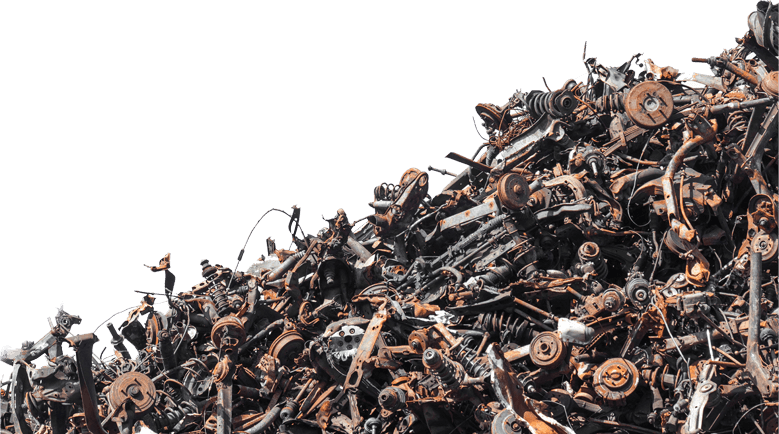
Scrap metal pile

Ferrous metals

Ferrous metals are strong and durable. This makes them ideal for use in construction, piping, automobiles and transportation structures.

Ferrous metals are prone to the risk of rusting because of their high carbon content. The exceptions to this rule are wrought iron and stainless steel. Wrought iron resists corrosion because its levels of carbon are extremely low, meaning that it is almost purely iron. Stainless steel is another ferrous metal that won’t rust. This is because it contains chromium, which protects it from rusting.

Ferrous metals are often magnetic. If you want to test what kind of metal you have, using a magnet is a simple way to do so.


3 ferrous metals and where to find them

Ferrous metals include:

  • Wrought iron. Wrought iron has a very low-level carbon content (around 0.8%), meaning that it is almost purely iron. It is malleable and resistant to corrosion. It isn’t commonly made anymore since there are other metals that are cheaper to work into structures. Many old ornamental fences, chains, nuts, bolts and pipes (to name a few) were made from wrought iron.
  • Stainless steel. Stainless steel is a steel alloy that contains chromium as well. It is commonly used because it is extremely resistant to corrosion as the chromium levels increase. It is used for cooking instruments, cutlery, surgical tools, construction material, storage tanks and food processing.
  • Cast iron. Cast iron is recognised by its carbon content of 2% and over. It also contains silicon. It is typically brittle and resistant to oxidation. It’s often used as an engineering material in pipes, automotive parts and machines.


Non-ferrous metals

Non-ferrous metals are typically less dense than ferrous metals, making them useful for situations where both strength and minimal weight are desired. A prime example of one such situation is the aircraft industry.

Non-ferrous metals are also more malleable than ferrous metals and are non-magnetic. They are perfect for electrical wiring, gutters, water pipes and roofing.


3 non-ferrous metals and where to find them

Non-ferrous metals include:

  • Copper is an easily distinguishable red metal that is soft and malleable. It is a good conductor of heat and electricity, making it ideal for use in motors, sheet roofing, and electrical wires.
  • Aluminium is a soft and ductile metal that has a low density and is resistant to corrosion. The metal and its alloys can be found in abundance because it is actually the second most common element in the world (after silicon). It’s used for aircrafts, automobiles, transportation, building facades and window frames, just to name a few areas.
  • Brass is an alloy of copper and zinc. Due to its bright gold appearance, it is commonly used in a decorative way for doorknobs, and for locks and gears. Instruments such as horns and bells are also made from brass. In addition to these items, brass is used for zippers, fittings, and for plumbing and electrical purposes.


The main difference?

The number one difference between the two metals is that ferrous metals and their alloys contain iron, whereas non-ferrous metals do not. This difference is actually a major reason why price can vary when you want to sell scrap metal.

Ferrous metals are generally abundant and easy to come by, thus lowering the amount you’ll be able to sell them for due to high supply. Prices generally remain constant because ferrous metals are so common.

On the other hand, non-ferrous metals are more scarce. They also don’t rust or corrode, which makes them highly sought after. This generally drives up the price you can sell them for.


What kind of metal can I sell?

When you sell scrap metal, you are managing your waste in a way that is environmentally beneficial. Not only that, it’s beneficial for you: you get paid for clearing up the space that’s being taken up by scrap metal that’s no longer useful to you.

You might be wondering whether you can sell either ferrous or non-ferrous metals. Some buyers will only pay for non-ferrous metals. But depending on your scrap metal buyer, you can actually sell both.


Are you looking to sell scrap metal? At Metal Men Recycling, we collect and recycle both ferrous and non-ferrous metals, with pickup available 24 hours a day at your convenience. We offer competitive rates that can be paid via cheque or EFTPOS, depending on what you prefer. Don’t hesitate to get in touch with us on 03 5941 6677 today.


How to Restore Bronze, Copper and Brass

Without a doubt, bronze, copper and brass are some of the world’s most beautiful metals. With their rich, warm colour and a soft shine, these metals have been used as ornamental decoration for thousands of years. Because of this, it’s not uncommon for us to inherit or pickup copper and brass homewares, cookware, jewellery or decorations in flea markets and second-hand shops. By the time these objects find their way to you, the decades or even centuries of wear have often left their mark on these objects in the form of patina, rendering them almost unrecognisable as the bright, shiny metals they started off as. Happily, it’s not particularly hard to restore tarnished brass and copper to their former glory and in this blog, we’ll be showing you how.

restored brass

What is patina?

A patina is a thin layer of corrosion which forms over many metals as they react to oxygen in the air. Tarnish is known as a ‘self-limiting’ form of corrosion (as opposed to rust) and will only affect the top few layers of metal and forms a kind of seal to protect the layers underneath from reacting.


Patina typically appears as a black or dull grey over the coating of the metal. Whilst this doesn’t sound all that appearing, the patina which appears on these metals as they age are highly prized by antique collectors and can actually increase the value of the item, depending on the type and extent of the patina.


How to remove dirt whilst maintaining the patina

If you have an antique copper or brass object and would like to retain it’s patina whilst removing dust and grime, the best way to do it is with soap and warm water.

  1. First, take a soft paintbrush and use it to brush away any debris
  2. Next, mix soap and warm water in a dish or small bucket (avoid soap containing chlorine bleach as this is corrosive)
  3. Get a soft cloth (like an old t-shirt) and dip it in the soapy mixture before gently wiping down the piece
  4. Once this is done, gently rinse the piece
  5. Dry immediately with a soft cloth

How to remove some of the patina

To remove the patina from brass and bronze:

  1. Mix 1 teaspoon salt, 1 cup vinegar and enough flour to make a paste
  2. Rub onto the object
  3. Rinse and dry

To remove tarnish from copper, make the same mixture but leave out the flour.


How to completely eliminate the patina

If you want to completely remove the patina of an object and return it to near new condition then a commercial copper/brass/bronze cleaner is your best bet.

  1. Rinse your item in warm water and dry with a soft cloth
  2. Rub the copper cream directly onto the item using a sponge or clean cloth
  3. Rinse again and then buff with another clean, soft cloth


Managing verdigris

Another type of tarnish is verdigris. This is a blue or green coloured substance which appears on old copper, brass and sterling. Verdigris is formed from a combination of oxygen, water and environmental pollutants. Whilst it is pretty, verdigris is corrosive and a toxic substance, so if you have it on copper cookware or jewellery, it’s probably a good idea to remove. If left untreated, verdigris will spread to other metal items close by.

To remove verdigris:

  1. Get a tube of cheap toothpaste and a soft toothbrush
  2. Put a little toothpaste on the brush and brush in the direction of the metal
  3. Wipe clean with a soft cloth like an old t shirt
  4. Once you have removed all the verdigris, rinse the item and dry it completely before storing it away


Remember that if you don’t want to keep your brass and copper, these metals have a high scrap value and are easy to trade for a profit with Metal Men. You have the option to bring your metal scrap to our Pakenham location or organise collection for larger items as we offer scrap metal pickup throughout Melbourne. To learn more please give us a call on (03) 5941 6677.


Please note that from 30th May 2018, we are no longer able to pay you cash for your scrap due to a change in Victoria’s scrap metal management laws. We offer payment via cheque or electronically.

Paying Cash for Scrap Metal is Now Illegal in Victoria

From the 30th of May 2018, scrap metal traders operating in Victoria will no longer be able to offer cash for scrap metal. This change is part of a set of Victorian Government reforms designed to crack down on criminal activities and the operation of criminal organisations in the state. In this blog, we’ll take a look at the new legislation and what it means for those wanting to make a profit from scrap metal.

Victorian Parliament

What does scrap metal have to do with crime?

For a number of years now, criminal organisations have taken advantage of Victoria’s loose legislation surrounding cash for scrap metal. Because scrap metal businesses have been able to offer cash in exchange for scrap metal with no questions asked and no paper trail, some criminal organisations have used this industry as a stream of revenue by stealing older model cars and selling them to scrappers for cash.

In recent years, this behavior has been escalating and thefts of older model cars have increased whilst some rogue scrap metal businesses have turned a blind eye to the illegal activities.

What is the new legislation?

Under the new legislation, scrap metal businesses are no longer able to offer cash in exchange for scrap metal. Payments must now be made electronically or via cheque so that there is some documentation of transactions which can be followed up if a scrapped car is found to be stolen.

This simple measure is designed to stop this criminal organisations earning revenue from the sale of stolen vehicles. Scrap metal businesses found to be in possession of an unidentified or stolen vehicle, or with ‘dodgy’ transaction records can face fines of up to $31,000.

Does Metal Men Recycling still pay for scrap metal?

As a legitimate scrap metal business dedicated to helping businesses and members of the public make a profit from their unwanted scrap metal, these changes will have little effect on the way Metal Men Recycling is operated.

We still offer fair prices for a wide range of recyclable metals including copper, brass, aluminum and steel as well as for car batteries and electronic waste.

As a customer of ours, you will now receive payment electronically or via cheque (it’s up to you) and you can expect the same friendly, professional service we have always provided.

If you happen to have some scrap metal that you’ve been meaning to get rid of, please don’t hesitate to drop by our Pakenham location or give us a call on 03 5941 6677. We offer scrap metal collection services throughout the city of Melbourne.