Catalytic converter recycling helps Melbourne sellers recover useful materials from unwanted vehicle parts while keeping transactions organised and traceable. A converter removed during vehicle repairs may still have recycling value, even when it no longer functions as intended. However, identifying the unit and documenting its source should happen before requesting an assessment or arranging its delivery.
For mechanics, dismantlers and householders, an organised approach reduces confusion about ownership, preparation and the recycler’s acceptance requirements. Metal Men Recycling provides scrap metal services for residential and commercial sellers, with payment made through electronic funds transfer. Sellers should discuss individual converters beforehand, because material condition and available documentation can influence the next steps. This guide explains what drives converter value, which Victorian rules matter and how to prepare parts for assessment. It also outlines questions that help sellers compare offers and maintain useful records after the transaction finishes.
Identifying Converters Before Sale
Matching vehicle information with readable component markings gives buyers useful context before discussing assessment arrangements. A converter’s appearance provides only part of the information needed for recycling assessment, preparation and an informed selling decision.
Recognising the Unit and Its Internal Materials
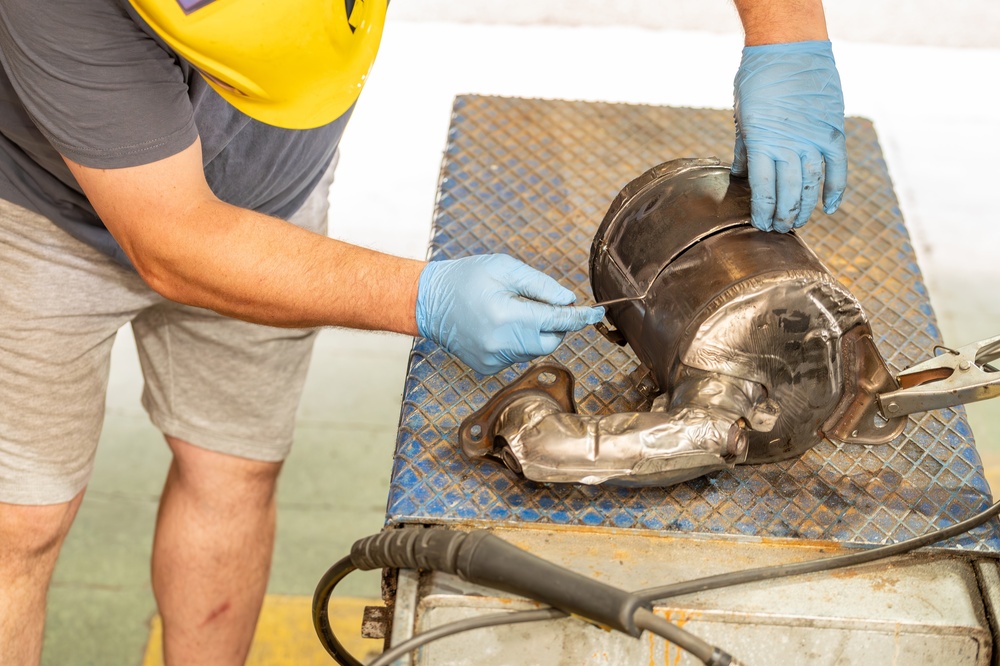
Photographs should capture identification markings clearly, allowing buyers to review details without physically handling components.
Catalytic converters form part of vehicle exhaust systems, using catalytic materials to help reduce pollutants produced during combustion.
Their internal ceramic or metallic structure can carry platinum, palladium and rhodium, depending on the particular converter design. These platinum group metals explain why assessment involves more than weighing the surrounding steel casing with ordinary exhaust scrap.
Sellers should photograph the complete unit and any readable markings before placing it into storage with other vehicle components. Recording the vehicle make, model and year can provide additional context when a recycler asks about its source.
Some exhaust assemblies contain other treatment components, so uncertain identification should be discussed before describing every item as a converter. A clear photograph and accurate description give the buyer a better starting point than assumptions based on shape alone.
Why Similar Parts Receive Different Offers
Keeping original and replacement units separately labelled helps buyers distinguish different components during initial assessment.
Similar-looking converters may contain different quantities of recoverable metals, making external appearance an unreliable guide to their recycling value. Original equipment and replacement units can differ, so vehicle details alone may not establish an accurate recycling assessment.
For scrap catalytic converters, readable markings and details about missing material help buyers understand what they are assessing. A damaged shell may retain internal material, while an intact casing can conceal missing contents that affect recycling potential.
Sellers should disclose known damage and modifications, providing clear photographs of the complete assembly and any readable identification markings. Keeping individual units distinguishable helps workshops avoid confusion when requesting assessments for several converters removed from different vehicles.
Identifying converters accurately and documenting their source gives Melbourne sellers a clear foundation for assessment and informed recycling decisions.
Reliable identification keeps assessments grounded in the actual component, supporting clearer discussions about potential recovery.
Preparing Records for Victorian Sales
Preparing paperwork early gives sellers time to resolve missing authorisations before arranging delivery or collection. Documentation should be organised alongside the component, before collection arrangements create pressure to resolve missing information at the last minute.
Legal Requirements and Supporting Evidence
Sellers should ask which identification documents the recycler accepts before preparing paperwork for their appointment.
Consumer Affairs Victoria says scrap metal dealers must register as second-hand dealers and keep records of regulated transactions.
Recorded purchase details include the seller’s name, address and identification details, alongside the material description and transaction information. Sellers can review Victorian scrap metal rules to understand identification, payment and record-keeping requirements before contacting a buyer.
For practical preparation, useful ownership evidence may include repair invoices, vehicle records, purchase receipts or relevant dismantling job records. These examples are supporting documents, rather than a universal checklist that guarantees every recycler will accept a detached converter.
A workshop should also establish whether the removed part belongs to its customer or has been authorised for recycling. Asking about required documents early avoids treating possession alone as adequate evidence that someone can legitimately sell the component.
Recording Removal and Authorisation
Staff should record who authorised recycling, ensuring subsequent enquiries reach someone familiar with the transaction.
Workshops can assign each removed converter a job reference and retain customer authorisation confirming permission to recycle the component. Photographs, dated notes and repair invoices should remain together, giving staff a clear account of the material’s origin.
One nominated employee can check documentation before collection, preventing converters from becoming separated from their records during workshop activities. A consistent handover procedure helps authorised staff locate paperwork when the employee responsible for the original removal is unavailable.
Householders can retain replacement invoices and ask their mechanic to identify the removed converter before contacting a recycler. Sellers should resolve uncertainty about ownership or origin before seeking a buyer or arranging catalytic converter disposal.
Traceable ownership and consistent documentation give Melbourne sellers a reliable foundation for legitimate recycling transactions and clear communication with buyers.
Consistent records connect authorised removal with the eventual sale, helping legitimate sellers explain each transaction.
Storing and Transporting Complete Units
Confirming handling requirements beforehand helps sellers choose suitable containers and avoid unnecessary changes during loading. Good preparation preserves identification and keeps the component manageable, without attempting specialist processing before a recycler explains its requirements.
Keeping Components Intact and Labelled
Labels should remain readable throughout storage, helping staff match each component with its supporting paperwork.
Sellers planning to recycle catalytic converters should ask whether the buyer wants complete units, attached pipework or another agreed format. Keeping the component intact initially preserves markings and avoids unnecessary work that could complicate assessment or lose internal material.
Cutting open a casing, crushing its contents or attempting chemical extraction should be left to appropriately equipped processing operations. A seller’s practical task is to present the material clearly, rather than trying to recover precious metals before assessment.
An organised storage area can keep converters separate from ordinary exhaust scrap, general rubbish and parts awaiting customer approval. Labels should identify the relevant job or vehicle without exposing personal customer information to everyone entering the workshop area.
Where a unit is already broken, the recycler should receive a description before advising how loose material should be contained.
Planning Delivery and Site Access
Sellers should nominate an accessible unloading location and confirm whether assistance is available before arrival.
Before transport, sellers should confirm acceptance, delivery arrangements and packaging requirements suited to each converter’s condition and dimensions. Suitable containers keep components secure and separated, preserving identifying references when several converters travel together for recycling assessment.
Loading arrangements should account for sharp edges, attached pipework and heavy assemblies, with suitable handling equipment used where required. For workshop collections, buyers should know the number of converters, site access conditions and whether other scrap accompanies the load.
Clear communication distinguishes converter assessment from broader collections involving batteries, wheels, radiators or other unwanted automotive metal components. Planned catalytic converter disposal allows sellers to check outgoing units against their inventory and resolve missing labels or paperwork.
Organised storage and delivery preserve identification, reduce unnecessary handling and help Melbourne sellers present converters ready for assessment.
Careful preparation keeps components identifiable and accessible, making the transition from storage to assessment straightforward.
Comparing Offers and Recovery Arrangements
Understanding assessment conditions helps sellers compare offers consistently and recognise questions requiring clarification before acceptance. Catalytic converter recycling involves both a commercial assessment and a downstream recovery process, which sellers should understand before accepting terms.
Comparing the Basis of an Offer
Written confirmation of agreed terms helps sellers check whether the final payment matches their understanding.
An offer for scrap catalytic converters can reflect recoverable metal content, condition, identification confidence and prevailing precious metal market conditions. Processing costs and the buyer’s purchasing arrangements can also affect the amount offered for a particular unit or batch.
Sellers should ask whether the quoted amount applies to individual identified units or depends on later sampling and analysis. Any conditions, deductions and payment timing should be clarified before delivery, especially when an initial estimate remains subject to inspection.
Comparisons are more useful when each buyer receives the same photographs, identification details and descriptions of damage or missing contents. A higher preliminary figure may be less informative when its conditions differ from another buyer’s assessment of the same material.
Sellers can sell scrap metal more confidently when acceptance requirements and the basis of payment are understood beforehand.
Recovery and Payment Confirmation
Specialist processors separate casings from catalyst material before preparing samples for analysis and metal recovery. An assay measures recoverable metal content, providing information that external appearance alone cannot reliably establish.
Research in Johnson Matthey Technology Review describes recovering platinum group metals from spent automotive catalysts. Processing methods depend on the material and facility, so sellers should confirm the recovery pathway.
For regulated Victorian scrap transactions, cash payments are prohibited, with qualifying cheques and EFT permitted. Metal Men Recycling advertises EFT payments, and sellers should confirm payment schedules before accepting offers.
Keeping receipts and payment confirmations alongside ownership records helps sellers document each completed recycling transaction. These records provide useful references when checking agreed amounts, payment dates and any outstanding questions. Sellers should raise unexplained differences promptly, providing relevant documents to help the buyer review discrepancies.
Clear terms, traceable handling and retained records support informed recycling decisions and straightforward transaction follow-up.
Ready to Arrange Catalytic Converter Recycling in Melbourne?
Look no further than Metal Men Recycling. Melbourne workshops and householders can discuss unwanted catalytic converters by providing details about their condition, identification and legitimate source. Those looking to recycle catalytic converters should confirm acceptance and preparation requirements before travelling or making arrangements for collection. Clear photographs, readable markings and organised ownership documents help the team assess enquiries and explain the next steps to sellers. Preparing these details supports an organised recycling enquiry and helps resolve questions about the component before assessment takes place.
Contact Metal Men Recycling at 03 5941 6677 or fill in our online contact form and we will get back to you.
Frequently Asked Questions
Can a Melbourne householder sell one catalytic converter?
A householder can enquire about selling one legitimately owned converter, although acceptance depends on the buyer’s requirements and material assessment. The seller should provide photographs, any readable identification markings and supporting records explaining where the part originated. Contacting the recycler first helps establish suitable documentation, preparation requirements and delivery arrangements before making a trip with the component.
Does a damaged converter still have recycling potential?
A damaged converter may still contain recoverable catalyst material, but its condition needs assessment before any offer is confirmed. Sellers should disclose broken sections, missing contents and any known modifications when contacting the buyer. Keeping damaged components identifiable and following the recycler’s containment instructions supports accurate assessment without unnecessary further processing.
Is a vehicle invoice always enough to prove ownership?
A vehicle invoice may help establish the source, but sellers should confirm the buyer’s documentation requirements before arranging the transaction. Detached components can require additional context linking the part to a vehicle, repair job or authorised dismantling activity. Workshops should retain customer authorisation where relevant, while householders can supply replacement invoices and ask which additional records are useful.
Should a converter be opened before taking it to a recycler?
A converter should generally remain intact until the recycler confirms the required preparation format for that particular component or batch. Opening it can remove useful identification context and create loose material that needs different handling arrangements. Sellers should photograph casings and markings, describe damage and leave specialist preparation to appropriately equipped processors.